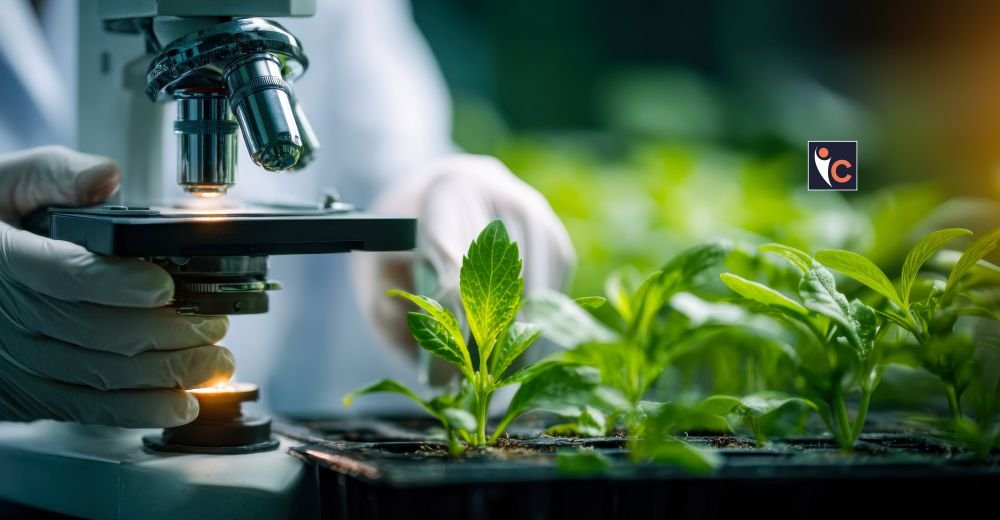
Sustainable Agriculture
With the growing concern of climate change and malnutrition, biotechnology innovation is changing the world of agriculture. The drastic weather conditions like drought, flooding and increased temperatures are threatening the crop production and billions of people are facing the issue of micronutrient deficiencies especially in the developing parts of the world.
Biotechnology can be eloquently used to generate crops that are more resistant to the environmental pressures and offer a higher form of nutrition that will sustain the food security without involving the need to use more land.
Main Technologies Fueling Agricultural Biotechnology Innovations
Biotechnology is upgrading the agriculture sector by developing crop strains that are more productive in terms of yield, resistant to stress, nutritional, and friendly to the environment. The technologies being developed are focused on meeting threats related to climate change and food security.
- CRISPR-Cas
The technology involves using a precise tool called CRISPR-Cas9, which is derived from a bacterium and utilizes guide RNA and the Cas9 enzyme to edit genes in a plant’s DNA. This technology creates non-transgenic plants, which in turn generates less regulation by governments, reducing the breeding process from 10-15 years to 3-5 years. Examples include drought-resistant corn and wheat that is resistant to diseases.
- Marker-Assisted Selection (MAS)
MAS relies on DNA markers for the selection of desirable traits ahead of traditional breeding for complex traits such as yield and tolerance. This enhances gene stacking and the use of AI.
- Transgenic Appro
These insert genes transferred from other organisms (such as Bt toxin for insect resistance) through Agrobacterium or gene guns. Already demonstrated in Bt cotton and herbicide-resistant crops but controversial due to stricter regulation against pesticide use.
- Microbial Bi
Engineers beneficial soil microbes like rhizobacteria for improving nutrient absorption and resistance to stress. Biofertilizers encourage sustainable agricultural practices. These technologies, combined, enable accurate, sustainable agricultural methods for meeting world food demands.
Developing Resilience to Climate
Applications for biotechnology innovation have also centered on enabling crops to resist abiotic stresses: drought, heat, flooding, and salinity. These edited varieties maintain productivity at times of water shortage or high temperatures, while other varieties resist uninterrupted submersion.
They are also resilient crops that require low inputs of chemicals, enhancing efficiency in nutrient use and minimizing impact on the environment. They help make farming sustainable by reducing fertilizer runoff and enhancing biodiversity.
Increasing the Nutritional Value
Biotechnology enriches essential micronutrients in staple foods through bio fortification. It can also be engineered to produce crops with greater levels of vitamins, minerals (iron and zinc), to deal with hidden hunger.
This strategy aims to address gaps that cause health problems such as poor immunity, anemia, and developmental hindrances especially where people have to depend on single staple crops.
Integrating Reliative and Nutrition
The enhanced biotechnology combines several characteristics to produce a stress-tolerant crop that is also enriched with nutrients. This multi-trait methodology makes sure that plants perform well in adverse environments as well as providing the best nutritional value.
Supplementary innovations such as biofertilizers containing engineered microbes are also helpful in keeping the soil healthy and decreasing dependency on synthetic inputs.
Influence on Developing Countries
In the case of smallholder farmers, the innovations enhance yields, minimize the use of pesticides and fertilizer, augment incomes and quality food. These technologies are made accessible in resource-constrained environments through the influence of public- Private partnerships and international research institutes.
It is the Biotech crops that enable adaptation to the predicted yield loss caused by climate change, which will bring about sustainable food systems in the prone areas.
Future Prospects
Legal controls, social acceptance, and fair allocation are still an obstacle. Nevertheless, the safety and advantage of these kinds of technologies are increasingly evidenced with the gene-edited products regularly experiencing expedited approvals.
Further investments in research are an indicator of good prospects. The adoption of the biotechnology innovation is imperative to the attainment of sustainable agriculture, food to satisfy the increasing populations and protection of international well-being and the environment.