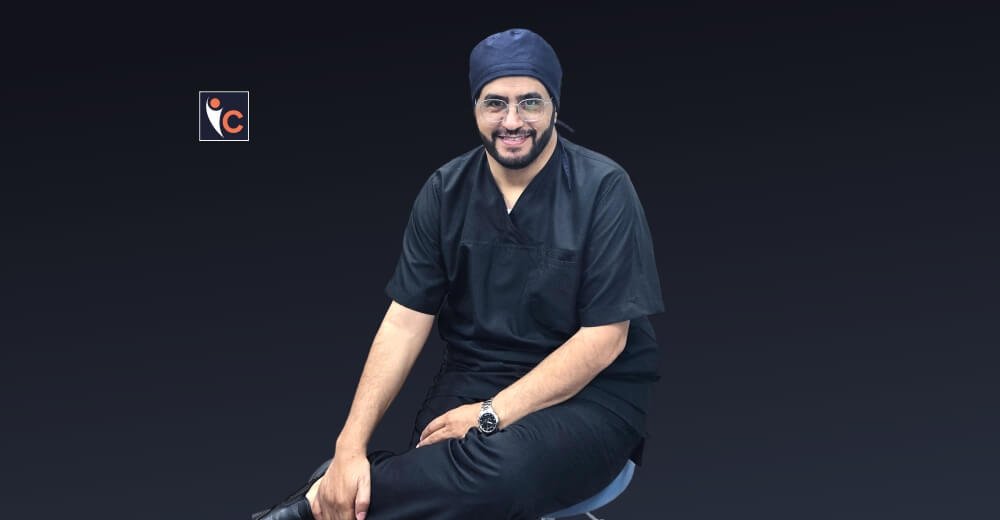
Behind many life-saving medical interventions are specialists whose skills can make a real difference in a patient’s life. For Dr. Musaed Al-Ghamdi, Vascular Surgeon, vascular surgery has been both his passion and his profession. For almost two decades, he has focused on treating conditions that affect the body’s arteries and veins, which can quickly become serious and impact organs, mobility, and overall health. With more people developing diabetes, cardiovascular disease, and kidney problems, his work is increasingly important. He combines careful surgical techniques with modern minimally invasive procedures and close attention to each patient’s needs.
Driven to make specialized care more accessible, Dr. Al-Ghamdi founded VEIN The Vascular Care, a network of centers providing advanced vascular treatments. The organization performs a wide range of procedures, from creating dialysis access and angioplasty to repairing arteries and veins. By building a strong team of surgeons, nurses, and support staff, he ensures that patients receive reliable care wherever they go.
More than just a surgeon, Dr. Al-Ghamdi is a leader shaping how vascular care is delivered. His training, experience, and focus on patients have turned a small initiative into a growing network serving thousands, showing how dedication and vision can improve healthcare for many people.
Let’s explore how Dr. Al-Ghamdi is transforming vascular care through expertise, innovation, and a growing network of specialized centers!
A Career Rooted in Surgical Expertise
Dr. Al-Ghamdi’s career in vascular surgery reflects both dedication and his strong interest in treating complex medical conditions. With almost two decades of experience, he has witnessed significant advancements in how vascular diseases are diagnosed and managed. The field has evolved with the rise of minimally invasive techniques and advanced imaging technologies, allowing surgeons to treat conditions more safely and effectively than ever before. These innovations have transformed patient care and expanded the possibilities for managing complex vascular problems.
Early in his career, Dr. Al-Ghamdi worked in academic medicine as a college staff member, teaching and mentoring while continuing his clinical practice. Over time, he felt the need to expand his professional impact beyond the academic setting. As he recalls, “I used to be a former staff member at a college. Now I mainly work in business. I initiated my own company and we are progressing.” This decision marked the beginning of a new phase in his career, one that would eventually lead to the creation of a growing network of vascular care centers.
The initiative began on a small scale with just a single center and limited resources, driven by a clear mission to improve access to specialized vascular treatment. Over time, as patient demand increased and partnerships with healthcare providers strengthened, the network expanded significantly. Reflecting on this journey, Dr. Al-Ghamdi notes, “We started with a small project with one center. Today, we operate across 9 cities, working in 15 centers and hospitals, including 7 of our own centers. In addition, we receive patient referrals from more than 65 clinics and hospitals, along with walk-in patients.”
As the network expanded, more surgeons, nurses, and administrative staff joined the team, enabling coordinated care across multiple locations. Today, the organization includes approximately eleven surgeons supported by trained healthcare professionals, ensuring seamless patient care across 15 centers and hospitals in 9 cities. Beyond these locations, the organization is connected to a wider referral network of more than 65 clinics and hospitals.
The organization addresses a wide range of vascular conditions, many of which are linked to chronic illnesses such as diabetes and kidney disease. A significant portion of the work focuses on creating dialysis access for patients with end-stage renal disease. The team also manages vascular insufficiency, diabetic foot complications, and venous disorders such as varicose veins. By providing these services across multiple centers and through an extended referral network, the organization ensures that patients who might otherwise struggle to access specialized care can receive timely and effective treatment.
Training Across North America
Dr. Al-Ghamdi’s expertise is built on extensive international training. He completed his general surgery training in Canada, gaining experience in high-volume hospitals with advanced surgical facilities. Describing this period, he says, “I was trained in general surgery in North America. I am Canadian-trained.” This experience exposed him to a wide range of surgical cases and helped him develop the technical and clinical skills necessary for complex vascular procedures.
After completing his general surgery training in Edmonton, he pursued a fellowship in vascular surgery in Vancouver for two years, focusing on both open surgical procedures and minimally invasive interventions. “I completed my general surgery training in Edmonton. After that, I did a fellowship in vascular surgery in Vancouver, BC, Canada for two years,” he explains. This specialized training gave him the tools to handle complex vascular cases, including arterial and venous reconstructions, dialysis access creation, and management of chronic vascular conditions.
Recognizing the growing role of imaging-guided procedures, Dr. Al-Ghamdi also trained in interventional radiology, learning to perform minimally invasive procedures using X-ray guidance. “Then I did another year of interventional radiology, also in Vancouver, BC, Canada,” he adds. This combination of surgical and interventional expertise allows him to approach each patient’s condition from multiple angles, selecting the most effective treatment while minimizing risk.
Delivering Comprehensive Vascular Care
The work of Dr. Al-Ghamdi and his team covers a wide spectrum of vascular procedures, from routine treatments to complex surgeries. Discussing the organization’s surgical services, he explains, “We perform vascular repair procedures. For example, we create vascular access for dialysis.” These procedures are critical for patients with kidney failure, ensuring that dialysis treatments can be performed safely and effectively.
In addition to dialysis access, the organization performs Permacath insertions, placing central venous catheters for temporary access. Angioplasty is another core service, using balloons to widen narrowed blood vessels in peripheral arteries, central veins, and other areas, helping restore proper circulation and prevent complications such as tissue damage or organ failure.
The team also treats chronic venous disorders, including varicose veins, improving both blood flow and quality of life. Diabetic foot care is a key part of the practice, addressing vascular complications that can delay healing and increase the risk of infection. In severe cases, wound debridement or even amputation may be necessary to preserve overall health.
Complex surgeries, including carotid artery procedures and major aortic repairs, are also performed. These operations require careful planning, precise imaging, and coordinated care from surgeons, anesthetists, and nurses. By offering such a comprehensive range of treatments, the organization ensures that patients can receive expert care for both routine vascular issues and life-threatening emergencies.
Since its inception, the organization has performed more than 19,000 procedures, reflecting both the scale of its operations and the trust it has built among patients and healthcare providers.
Responding to Emergencies in Vascular Medicine
Vascular surgeons often face emergencies where rapid intervention can be life-saving. Dr. Al-Ghamdi highlights this aspect of his work: “Vascular surgery is one of the most important surgical specialties and is often needed in emergency situations.” Trauma cases, such as amputations, gunshot wounds, or stab injuries, may require immediate reconstruction to restore blood flow and prevent severe bleeding.
Unexpected complications can also arise during other surgical procedures if major blood vessels are accidentally damaged. In such situations, the presence of a vascular specialist is crucial. Controlling bleeding and repairing vessels under these circumstances demands calm decision-making and years of experience. Vascular surgeons must often remain on call around the clock to respond to emergencies, ensuring that patients receive timely, life-saving care whenever it is needed.
Growth Through Private Sector Innovation
A turning point in Dr. Al-Ghamdi’s career came when he transitioned from government hospitals to the private sector. While public institutions offered valuable experience, they often had rigid administrative controls that limited the number of procedures a surgeon could perform and restricted access to necessary resources.
Private hospitals, by contrast, offered greater flexibility and autonomy. Extended operating hours, including weekends, allowed the organization to serve more patients efficiently. This approach significantly increased the volume of care the team could provide. With dedicated teams handling logistics, nursing, and patient communication, the organization built a streamlined system capable of managing thousands of procedures annually across multiple centers.
Leadership Through Coordination and Trust
The organization’s operational success is built on careful coordination and trust. At the center of the process is a call team that manages referrals and communicates between patients and the medical team. Physicians review cases and provide guidance, while the coordination team schedules appointments, explains instructions, and prepares patients for surgery. Pre-operative evaluations by anesthetists and additional investigations are arranged as needed, ensuring smooth workflow and effective patient care.
Technology plays a key role in supporting these operations. The organization developed a secure cloud-based platform to store patient records, imaging, and procedure histories. This system allows physicians to access information quickly when patients return, enabling them to make informed decisions about next steps.
Trust has been another driver of growth. Early collaborations with hospitals and patient organizations helped establish credibility. As confidence grew, the network expanded into new cities, and charitable organizations began partnering with the team to provide care for patients unable to afford treatment.
Recognition and a Vision for the Future
The organization’s success has attracted recognition from both government authorities and industry partners. A project led by Dr. Al-Ghamdi was identified as one of the most successful initiatives in a city, leading to an invitation to meet national leaders after Ramadan. This recognition could create opportunities for further government support and expansion.
The organization has innovated an operating model to perform interventional procedures across multiple centers. This model allows faster and more flexible treatment, and the organization has expanded its use to meet growing patient needs.
Looking forward, Dr. Al-Ghamdi envisions building specialized vascular surgery centers with intensive care and cardiac units. These centers would focus solely on vascular care and include dedicated hospital beds for complex surgeries. The goal is to raise the standard of vascular treatment while continuing to expand access to specialized care.
Through his dedication, vision, and leadership, Dr. Al-Ghamdi has transformed a small initiative into a growing network of vascular care centers, serving thousands of patients and shaping the future of specialized healthcare in the region.