Early in my career, I travelled through hospitals, ministries of health and boardrooms across the United States, Asia Pacific, Latin America and Eastern Europe. No matter which airport I had just landed in, I kept noticing the same thing. The people holding the health system together on the ground were almost always women. Nurses. Community health workers. Mothers negotiating a diagnosis for a parent or a child, often navigating systems that were never built with them in mind. Almost none of them were ever in the room when the budgets or the research priorities got decided. Thirty years later, the women who shaped how I think about healthcare were rarely the ones on the stages I now speak from. They were the ones quietly fighting for basic access to care, for themselves and their families.
In 2017, I stood in front of a room of investors and executives and made a prediction. I said the “Sheconomy” — women’s collective power as earners, spenders and decision-makers — would become one of the defining megatrends of the next decade. I said global female income would climb toward $24 trillion within a few years. By 2020, it had reached $23.2 trillion. Close enough that I don’t feel the need to hedge that part of the story. This year, it is projected to hit roughly $29.3 trillion. Women now drive the majority of spending in most markets I have studied. They are starting businesses faster than men across large parts of the world. And this same generation of women will spend the next decade financing and managing the health decisions of aging parents, just as much as their own. On the economic side of the ledger, the Sheconomy arrived almost exactly on schedule.
Healthcare did not keep pace. That is the uncomfortable part of a ten-year retrospective I did not expect to still be writing.
Take cardiovascular disease, the leading cause of death for women worldwide. Women having a heart attack are still roughly 50% more likely than men to be misdiagnosed. Part of the reason is simple: the textbook symptoms doctors are trained to look for were drawn from studies of male patients. Coronary research funding aimed specifically at women still sits at around 4.5%. Or take autoimmune disease — a category most people I talk to do not even realize is a women’s health issue. An estimated 24 million people in the US alone live with an autoimmune condition such as lupus or rheumatoid arthritis. By most estimates, nearly 80% of them are women. Yet the diagnostic pathways, and the specialists trained to recognize these diseases quickly, remain thin. I have lost count of the women in my own circle who spent years moving between doctors before getting the right diagnosis. Multiply that pattern across menopause, endometriosis and PCOS, and you get what the World Economic Forum quantified only this year. Those conditions together affect hundreds of millions of women. Yet they receive under 2% of private healthcare investment. More than 90% of the already-thin pool earmarked for women’s health is concentrated in just three areas: reproductive health, maternal care and cancer.
So is there a country, anywhere, that has actually built a health system around the fact that women are half its population? I went looking, genuinely hoping to find a clean answer. The closest is Australia. It became the first country in the world to adopt a National Women’s Health Policy back in 1989, and has since built it into a 2020-2030 national strategy organized explicitly around “woman-centred care.” Even there, a recent review of women’s own maternity care experiences under that strategy found it is, in the researchers’ own words, “great in theory.” The intent has outpaced the practice. England published its first-ever Women’s Health Strategy only in 2022, and appointed its first Women’s Health Ambassador the same year. The two countries furthest along have been at this seriously for only a few years, or a few decades in Australia’s case. So the honest answer to my question is: nowhere yet, at the scale our numbers deserve.
This is what makes the moment interesting for our own region. Saudi Arabia’s Vision 2030 Health Sector Transformation Program has pushed women’s workforce participation past 38%. Women now approach 40% representation across health professions under the Saudi Commission for Health Specialties. The UAE has produced femtech ventures such as Nabta Health, built specifically to close the gap for women’s physiology that older, Western-built platforms never addressed. Australia and England are retrofitting gender equity onto forty-year-old health systems. The Gulf gets to do something different: it is digitizing and rebuilding its health infrastructure in the very same decade that it is expanding its female workforce. That sequencing is a genuine advantage, if the region chooses to use it rather than simply import the models it is watching elsewhere.
Here is my honest recommendation, as an analyst who has spent thirty years watching where the money goes: stop waiting for venture capital to solve this. Venture capital backs companies that can already prove their risk is manageable. It was never built to generate missing evidence in the first place. Decades of clinical trials simply excluded women, and that gap is not a venture problem. It is a public infrastructure problem. It needs public and sovereign capital to fix it. Governments, health ministries and the long-horizon sovereign and family wealth funds that already dominate healthcare investment across this region should be funding sex-disaggregated clinical trials and dedicated women’s health research budgets directly. Treat it the way we treat roads, ports or power grids: as the infrastructure that makes everything built on top of it possible. Once that evidence base exists, private capital will follow, because the risk investors keep citing will no longer exist. Right now, we are asking women’s health founders to build billion-dollar companies on missing data. Fix the data first. The companies, and the returns, will follow on their own.
About the Author
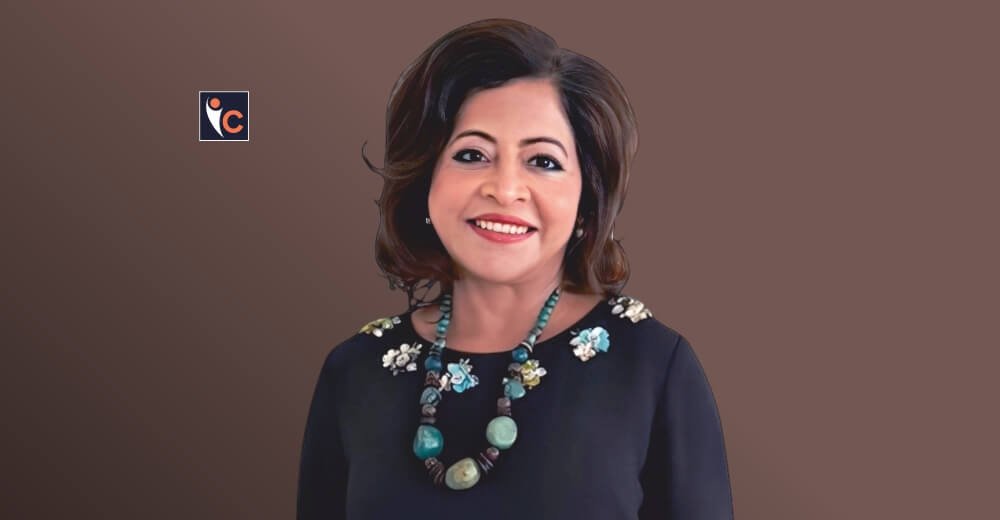
Reenita Das, Founder of Reenita Das Inc. and Chief Transformation Officer at NXT Horizon, brings over three decades of experience in the consulting industry. After years within traditional frameworks, she chose to challenge and redefine them rather than uphold the status quo.
A published author and longtime Forbes contributor, she co-authored The State of FemTech, one of the first books in the category. Known for her forward-looking insights, she predicted “doctorless care” in 2017, well before it became a reality.
Her work has earned her recognition as one of the Top 100 Women in HealthTech and FemTech, the Top 50 Healthcare Strategists to Follow, and the Top 30 Women of Influence by Inc. Arabia. She also founded the GLOW program to support women in the global workforce.
At NXT Horizon, she focuses on transforming consulting by connecting market intelligence, campaigns, and AI into a unified system for B2B organizations in complex, regulated industries.
Reenita is now focused on creating meaningful impact in the areas of longevity medicine, health equity, and prevention. Her work is centered on advancing solutions that improve long-term health outcomes, expand access to care, and shift the focus of healthcare toward proactive and preventive approaches.
To learn more, visit her LinkedIn profile: https://www.linkedin.com/in/reenitadas/