Biotechnology is changing healthcare in ways people once thought impossible. One of the most exciting areas is regenerative medicine, where stem cells are helping doctors repair damaged tissue, slow aging, and give new hope to patients with difficult conditions. This progress is also driving new research and healthcare growth across the Arab world.
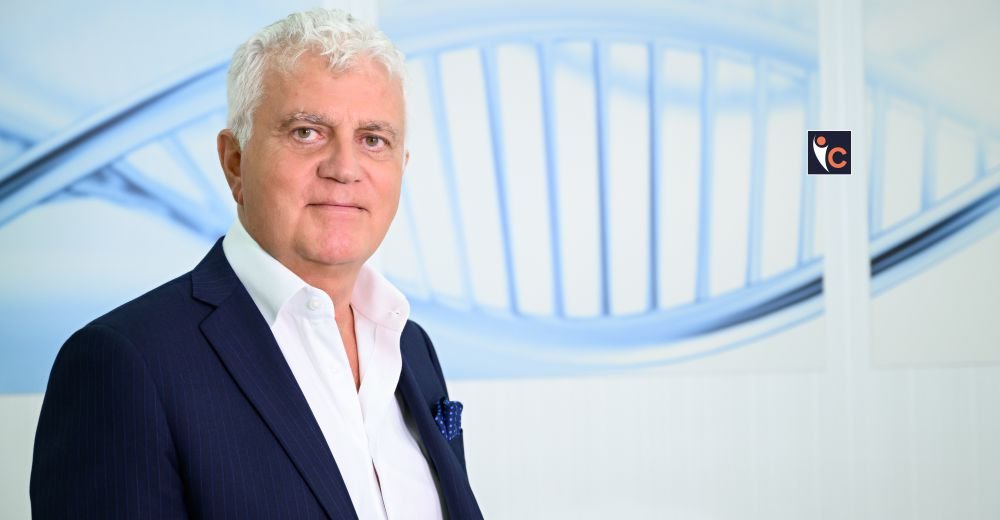
The Bioscience Institute has been part of this change for almost twenty years. What started in Europe has now expanded into the Middle East, making the institute a global name in stem cell science and anti-aging research. Leading it is CEO Giuseppe Mucci, who believed in stem cells long before they became widely known in medicine.
Being named one of the Arab world’s most advanced stem cell centers in 2025 shows how far the institute has come. It is the result of steady work, strict science, and a commitment to patient safety—driven by a vision that has grown into something with global impact.
Let’s explore how Bioscience Institute is shaping the future of stem cell innovation in the Arab world!
Early Beginnings in a New Field
Mucci’s introduction to biotechnology was marked by curiosity and a determination to build something new at a time when the science was still finding its footing. He recalls how “the journey began in the early 2000s, when the scientific community first started exploring the potential of stem cells derived from umbilical cord blood.” At that stage, laboratories around the world were racing to establish cell factories dedicated to the preservation of these cells, experimenting with how they could be applied in clinical contexts.
It was within this pioneering climate that he launched one of Italy’s first advanced cell factories in 2007. This facility not only stored stem cells, as many others were doing, but also manipulated them with the clear goal of enabling their clinical use. In doing so, Giuseppe Mucci moved beyond preservation and into the active application of stem cells, setting the stage for a wide spectrum of therapeutic innovations.
Over time, the focus expanded beyond cord blood. Stem cells derived from adipose tissue and umbilical cord tissue began proving their therapeutic value, leading to significant advancements in treating degenerative processes and diseases. Cord blood stem cells remained invaluable for hematological disorders, but stem cells derived from fat and cord tissue emerged as ideal for targeting age-related degeneration in organs and tissues. This expansion broadened the relevance of the institute’s work, opening pathways to applications that were of immediate interest to anyone beyond the age of thirty.
A Vision Beyond Pharmaceuticals
The foundation of the company was always rooted in an ambitious vision. As Giuseppe Mucci explains, “the company’s vision has always been rooted in positioning Cell Biology as an alternative to chemistry—namely, to pharmaceuticals and synthetic products—for the treatment of both physiological and pathological degenerative processes in the human body.”
Unlike conventional pharmaceutical approaches that often focus on alleviating symptoms, this vision sought to identify and address root causes using natural biological mechanisms. The goal was not simply to cure, but to preserve, repair, and extend health, all while avoiding side effects that often accompany drug-based treatments.
In 2012, the institute broadened its scope further by venturing into molecular biology. A spin-off at the University of Rome led to the establishment of a genomics laboratory. This approach was not limited to Italy; the model has since been replicated in collaboration with Harvard University in Boston.
Over twelve years, the organization developed proprietary technology designed to analyze and manage the molecular mechanisms of aging and its related diseases, including cancer. This dual expertise—stem cell expansion for anti-aging therapy combined with genomic and epigenetic diagnostics of aging—positioned the institute uniquely within the global longevity sector. It was precisely this integration of cellular biology and molecular diagnostics that laid the foundation for its groundbreaking partnership with Harvard, a collaboration that further elevated its international reputation.
Entering the Arab World
The decision to expand into the Middle East was both strategic and visionary. The Arab region was emerging as a hub of healthcare innovation, driven by investment, infrastructure development, and a growing interest in medical tourism. Giuseppe Mucci saw this as an opportunity to bring cutting-edge stem cell science to a new audience. “The journey into the Arab world began in 2010, when I founded the company that was intended to build the first cell factory in the UAE for the cultivation and commercialization of stem cells—the first of its kind in the Middle East.”
The path, however, was anything but straightforward. At the time, the region lacked both precedent and regulatory frameworks for such advanced facilities. It took more than three years of regulatory processes before operations could begin. Because expanded stem cells were classified as a drug, only national authorities—specifically the Ministry of Health—could authorize licenses, making local approvals insufficient.
In 2013, the Italian laboratories underwent a rigorous audit by the UAE Ministry of Health. By 2014, after considerable investment in infrastructure and process development, the Middle East facility became fully operational, cultivating and commercializing expanded stem cells for the first time in the region.
Yet, one of the early challenges was education. Many in the market were unprepared, lacking awareness of what stem cells were, and often confusing embryonic stem cells with mesenchymal stem cells derived from fat tissue. Building awareness became as important as delivering treatments.
Pioneering Treatments That Redefine Aging
Among the most significant achievements of the institute has been the development of therapies that target fundamental systems of the human body. At the forefront is a treatment designed to strengthen the heart-lung system. As Giuseppe Mucci describes, “the most important mesenchymal stem cell treatment we have developed targets the enhancement of the heart-lung system, which we consider the engine of the human body.”
The logic behind this approach is straightforward yet profound: without an efficient cardiorespiratory system, the body cannot deliver adequate oxygen or remove waste effectively, leading to fatigue, premature aging, and increased vulnerability to chronic diseases. By addressing the very system that sustains cellular life, this treatment offers what Giuseppe Mucci calls “the only truly effective anti-aging intervention because it addresses the root causes of aging rather than just its symptoms.”
This philosophy resonates deeply with the broader mission of the institute—preventing age-related diseases by slowing degenerative processes at their core rather than merely managing outcomes.
Standards That Go Beyond Profit
In an industry as sensitive as stem cell therapies, compliance and safety cannot be optional. The institute’s reputation has been built on rigorous adherence to standards, even when doing so raises production costs. As Giuseppe Mucci emphasizes, “safety standards for companies operating in the stem cell field are well known throughout the industry and are defined by Good Manufacturing Practice (GMP) certification.”
These standards often make the cost of production extremely high, sometimes to the point of making therapies prohibitively expensive. Despite this, the institute has consistently implemented the strictest standards to safeguard patients. “For us, the logic of profit has never—and will never—come at the expense of patient protection,” he affirms.
It is this uncompromising commitment that has allowed the company to sustain steady, organic growth for 18 years, building not just treatments but also trust.
Milestones That Redefined Possibility
Over the years, the institute has achieved a series of scientific milestones that reflect both its mission and its capacity to innovate. In 2007, the use of adipose-derived stem cells was directed toward treating skin defects. By 2009, the organization published its first clinical study on Systemic Sclerosis, demonstrating the ability of stem cell therapies to repair skin damage caused by the disease.
Further research showed the efficacy of adipose-derived stem cells in soft tissue augmentation, with results highlighting not only improvements in tissue quality but also prolonged outcomes in procedures for breast, buttock, and penile volume enhancement. These studies underscored the wide-ranging potential of stem cells beyond traditional medical treatments, extending into reconstructive and regenerative aesthetics.
Globally, the momentum of clinical research surged. Over the past decade, nearly 1,700 studies were registered to test stem cell safety and efficacy for conditions ranging from orthopedic disorders and infertility to hair loss, erectile dysfunction, and systemic aging.
A landmark moment came in December 2024, when the U.S. FDA approved the use of allogeneic stem cells—those derived from donors—for pediatric transplant patients to prevent graft rejection. This decision was transformative, confirming the safety and efficacy of mesenchymal stem cells in modulating the immune system without harmful side effects. It was a global milestone that validated years of work within the field and provided renewed momentum for broader adoption.
Navigating Market Challenges
The early years in the Middle East posed unique challenges. Even after obtaining a license from the Ministry of Health, the institute faced a market that was unprepared for such advanced products. Awareness levels among both physicians and patients were low, and the high cost of therapies—driven by equally high production costs—created additional barriers.
Unlike pharmaceutical drugs, which can be mass-produced and scaled, stem cell therapies are tailor-made and therefore not easily scalable. Prices could not be reduced without compromising quality. As a result, the organization focused heavily on education, ensuring that patients and physicians had the knowledge to understand the value and quality of stem cell products. This strategy gradually built trust and demand in a challenging environment.
The Role of Partnerships and Government
Long-term success in such a specialized field requires collaboration. For regenerative medicine to flourish, partnerships with governments, research institutions, and educational platforms are indispensable. Giuseppe Mucci notes that “government-level partnerships hold fundamental strategic importance. However, the realization of such partnerships depends on the presence—on the government side—of counterparts who possess specific knowledge and are genuinely sensitive to the subject matter.”
This underscores the need for informed regulatory authorities capable of creating environments where innovation can thrive while maintaining safety and oversight. It is a delicate balance, but one that determines whether a region can emerge as a trusted global hub for medical innovation.
The Future of Regenerative Medicine
The trajectory of stem cell therapies suggests a future of unprecedented opportunity. The Arab world, in particular, holds promise due to its investments in healthcare infrastructure and medical tourism. However, Giuseppe Mucci warns of potential pitfalls, noting the need to avoid becoming “the next Costa Rica of Stem Cells.” This caution points to the risks of unregulated practices and the importance of establishing credibility through competent and proactive oversight.
For the region to capitalize on its potential, regulatory authorities must authorize only practices that can be rigorously monitored and controlled. Importing stem cells from foreign countries without adequate safety guarantees must be strictly prohibited. By setting and enforcing such standards, the Arab world can position itself as a global leader in regenerative medicine rather than a cautionary tale.
Inspiring the Next Generation
For young scientists, researchers, and entrepreneurs, regenerative medicine presents both opportunities and challenges. Giuseppe Mucci advises that while cell biology offers powerful methods of targeting degenerative processes at their roots and without side effects, it will likely never achieve the scale of the chemical-pharmaceutical industry. The production of cellular therapies cannot currently be industrialized, making it a highly specialized and niche field.
Yet this specialization is precisely what makes it appealing for those who thrive on challenge. The sector demands constant innovation, continuous learning, and a proactive approach to staying updated. It is not a field for the complacent but for those driven by curiosity, resilience, and a passion for making a lasting impact on human health.