The healthcare sector is undergoing a major transformation because of digitalisation, which organisations are embracing worldwide through their adoption of connected technologies to improve patient results and operational productivity. The current medical landscape depends on remote healthcare services which enable doctors to monitor patients from sites outside their clinical practices. Google Patient Remote Monitoring has become a powerful entity which employs advanced data analysis, cloud technology and integrated medical systems to revolutionise healthcare delivery systems through its response to continuous market changes.
The need for remote monitoring solutions has been increasing with the growing number of chronic diseases, aging population that are accessible to everyone. Today, hospitals and healthcare providers target digital services which allow for ongoing patient interaction and real-time monitoring of health metrics. These technologies are enabling healthcare organisations to securely and efficiently collect, manage and analyse patient data and enhance care quality.
Real Time Patient Monitoring
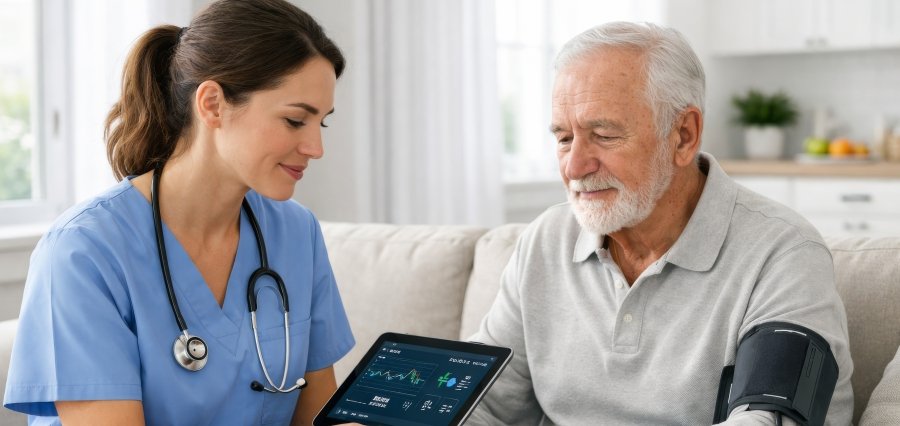
Healthcare providers use remote technology to conduct ongoing patient monitoring without needing their patients to visit hospitals often. Patients with chronic conditions such as diabetes, hypertension and cardiovascular diseases require medical staff to monitor their health continuously and provide immediate medical care. Google Patient Remote Monitoring enables healthcare organisations to track patient health from home while they can quickly respond to any changes in patient health metrics. The system provides real-time visibility which helps to reduce medical complications while improving long-term health outcomes.
Healthcare providers use telematics solutions for two purposes, which include monitoring remote patient locations and tracking treatment progress. Research has discovered that patients who received continuous reminders through connected devices showed better adherence to their care plans. The system enables patients and their medical team to exchange information which results in improved decisions for their treatment.
Enhancing Operational Efficiency
Healthcare organizations work to improve service quality while reducing costs and solving their staffing problems. Hospitals and clinics use remote monitoring technologies to decrease hospital admissions and unnecessary in-person visits which enables them to use their resources more efficiently. Google Patient Remote Monitoring enables healthcare providers to identify health problems which they can address through preventive measures to decrease emergency department visits and hospital stays.
Healthcare systems are using cloud-based healthcare platforms to improve their coordination capabilities between different departments. The system enables doctors , nurses and other medical specialists to access patient data while they work together to develop precise medical treatment plans. The digital system provides secure patient data access across different healthcare facilities while it maintains continuous patient care. This new connectivity boosts communication, minimizes administrative hassles, and improves overall healthcare productivity.
Future of Connected Healthcare
Digital innovation, artificial intelligence and predictive analytics will have a significant impact on the future of health care. Healthcare facilities will use remote monitoring technologies to detect health risks and deliver preventive treatment services. AI technology analyzes extensive patient data to discover patterns that enable it to predict future health problems and recommend suitable medical treatments. Google Patient Remote Monitoring is well suited for the future, and is built on a combination of scalable cloud infrastructure and powerful analytics that can enhance clinical decision making.
The use of wearable devices and Internet of Things (IoT) technologies is increasing the capabilities of connected healthcare delivery. Patients can have their health data continuously captured by smartwatches, biosensors and connected medical devices which can safely exchange patient data with medical care providers. This continuous stream of data enables healthcare providers to better understand their health patterns and tailor treatment plans to individual patients. The integration of these cutting-edge digital technologies is making it easier for healthcare systems to incorporate connected devices into larger care management initiatives focused on preventive and value-based healthcare delivery.
Conclusion
Digital healthcare technologies are now advancing rapidly to create new methods for delivering medical services which people will experience worldwide. Healthcare providers use remote monitoring solutions to achieve better patient results, enhanced operational productivity, and effective management of patient care. Google Patient Remote Monitoring functions as a key element in this transformation through its support of real-time data exchange, personalised treatment approaches and integrated medical services which address the changing requirements of both patients and healthcare providers.
Remote patient monitoring will become a fundamental component of healthcare systems which will implement artificial intelligence, wearable technologies and cloud-based platforms throughout their operations. The implementation of continuous accessible data-driven care will enable healthcare organisations to make better decisions while increasing patient engagement across their operations. Remote monitoring technologies will establish the foundation for future healthcare delivery which emphasises patient-centred and value-based approaches through their focus on connectivity and scalability.