By a senior orthopedic sports surgeon
We’ve been dealing with a big issue for over twenty years, and I think we’re looking at it the wrong way. It’s not just one problem, but two opposite ones. In my clinic, I see two types of kids. One is a teenager who doesn’t get much exercise; their joints are stiff, and their muscles aren’t developed as they should be for their age. They can barely run to the school gate without getting tired. On the other hand, I have a twelve-year-old who has a stress fracture from training too much. Their parents drive them to three club sessions every week, thinking they’re going to be a national champion one day. Both kids end up getting hurt, but in different ways. They’re both victims of a system that’s lost its balance when it comes to physical activity. We need to find a middle ground where kids can be active and healthy without overdoing it or not doing enough.
Two Failures, One Root Cause
The sedentary child and the overtrained child look like opposites, but they share a common cause: adults – parents, coaches, schools – making decisions about a young body’s activity level based on convenience, ambition, or anxiety, rather than on sound physiological principles.
Screens, transportation by car, and the disappearance of unstructured outdoor play have produced a generation with weaker core stability, poorer proprioception, and less resilient bone density than their parents had at the same age. When these deconditioned children do play sport – often sporadically, in bursts around exams or holidays – their tissues simply aren’t prepared for the load. The result is a steady stream of avoidable ankle sprains, ACL tears, and growth-plate injuries that a modestly active child would likely have avoided.
I’ve seen some alarming things happening in families that are really into sports. Some kids are specializing in one sport way too early, training six or seven times a week, and being told to just “tough it out” when they’re feeling a little pain. This is a recipe for disaster, and it’s no wonder that overuse injuries are becoming more and more common in young athletes. We’re talking about stress fractures, Osgood-Schlatter disease, apophysitis, and tendinopathies – injuries that used to be mostly seen in adults. The sad thing is that most of these injuries could be prevented if kids just didn’t overdo it. But the pressure to get a scholarship, make a team, or just make their parents happy is often too much, and common sense goes out the window. It’s a shame, because with a little basic load management, we could avoid a lot of these problems.
Prevention Is Not Optional – It Is the Treatment
If I could get one point across to all parents, coaches, and young athletes, it would be that preventing injuries is not just a bonus, it’s the best way to keep kids safe and healthy. Think about it, surgery is basically a fix for something that’s already gone wrong. The real goal should be to avoid needing it in the first place. By taking steps to prevent injuries, we can help young athletes stay on the field and out of the operating room. It’s a simple idea, but it’s one that can make a huge difference in the long run.
Modern sports medicine has shifted decisively toward proactive care:
- Movement screening before injury, not after.Simple assessments of hip, ankle, and core stability can flag athletes at high risk of ACL or hamstring injury months in advance, allowing targeted correction through strength and neuromuscular training.
- Structured strength training for youth.The old fear that resistance training “stunts growth” has been thoroughly disproven; properly supervised strength work is now one of the single most effective ways to reduce injury risk in young athletes, while also building the very resilience that sedentary children lack.
- Load monitoring.Tracking training volume and intensity – and respecting mandatory rest – prevents the accumulation of microtrauma that turns into stress fractures and chronic tendon problems.
- Multi-sport participation.Encouraging children to play more than one sport, rather than specialising before puberty, spreads mechanical load across different movement patterns and measurably reduces overuse injury rates.
Treatment: Less Cutting, More Precision
These days, when people get hurt, doctors try to be more precise and less aggressive. They use special tools like arthroscopes to look inside joints and fix problems without making big cuts. But the biggest change is in how doctors think: they’re more careful about deciding when to operate and when not to. Lots of injuries, like torn meniscus, partially torn ligaments, and tendon problems, can get better with a good rehab plan, and might not need surgery at all. A good surgeon should always ask themselves if surgery is really necessary, rather than just thinking about whether it’s possible. They should consider if a well-designed rehab program could work just as well, or even better. This approach helps people get back on their feet without going under the knife, and it’s a big shift in how doctors treat injuries.
When surgery is needed, new techniques can help people heal faster and have better joint health in the long run. This is especially important for athletes who still have many years of playing sports ahead of them. Doctors can use special treatments like platelet-rich plasma, reconstructive cells, and augmentation of structures, which helps the body heal itself, and new ways of sewing tissues together that don’t damage them as much. They can also choose the best type of graft for reconstructing ligaments, which helps the joint stay healthy for years to come. All these advances mean that athletes can get back to their sports faster and have less risk of long-term damage.
Recovery: The Most Neglected Phase
People often overlook the importance of preventing injuries, and when it comes to recovery, it’s like it’s not even on their radar. I get asked all the time by parents, “When can my kid get back to playing?” But hardly anyone ever asks, “What can we do to prevent this from happening again in the future?” It’s like they’re only focused on getting back to normal, without thinking about how to avoid another injury down the line.
Genuine recovery is not simply the absence of pain. It is a structured, staged return that rebuilds strength, restores movement quality, and – critically – includes psychological readiness. Athletes, especially adolescents, frequently return to play before their nervous system has regained trust in the injured limb, which is one of the leading causes of re-injury. Sleep, nutrition, and adequate rest days are not “soft” add-ons; they are measurable determinants of tissue healing and injury recurrence, and they deserve the same discipline as any training programme.
What I Would Ask of Parents and Coaches
Ambition for a child’s sporting future is not the enemy – indiscriminate ambition is. I would ask parents to trust a graded, individualized plan over a rigid schedule; to treat a child’s complaint of pain as data, not weakness; and to value a well-rounded, moderately active childhood over either extreme of the couch or the year-round travel team.
Playing sports is one of the best things a young person can do for their health, as long as they’re prepared and play safely. The goal of sports medicine today is to use facts and evidence to help kids play sports in a healthy way. We want to see fewer kids who are stiff from not moving enough and fewer kids who get hurt from training too hard. Instead, we want to see more kids just playing and having fun, in a way that’s good for their bodies and sustainable for the long term. By doing things right, we can help kids stay healthy and happy while they play the sports they love.
About the Author
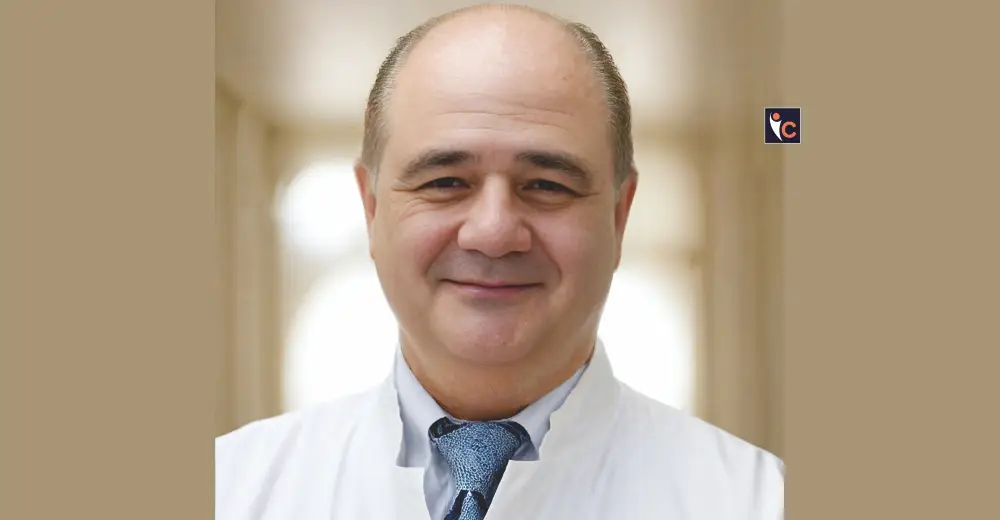
Dr. Hans-Joachim Poessel is an orthopedic surgeon and sports medicine specialist with extensive international experience across Germany, Switzerland, and the UAE. A former Bundesliga team physician and founder of Orthopaedics Wolfsburg, he combines clinical expertise with sports medicine insight, bringing an orthopedic perspective to patient care, performance, and sports shoe testing.