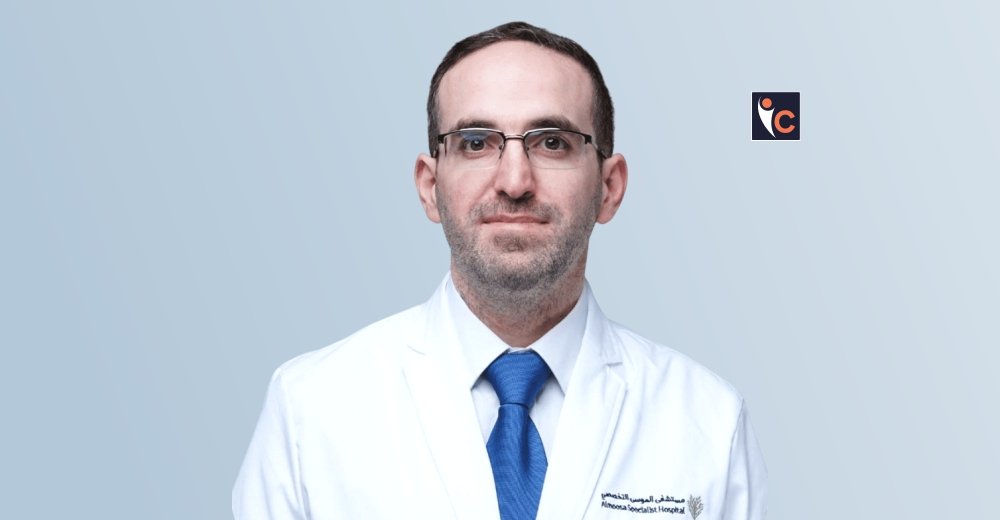
With a career shaped by both clinical excellence and academic dedication, Dr. Omar Abdulmajid Masri serves as Chief of Internal Medicine at Almoosa Health. He began his professional journey after completing his Internal Medicine residency and Gastroenterology fellowship at the American University of Beirut Medical Center, followed by advanced endoscopy training in Istanbul, Turkey.
In 2014, he started working as a junior gastroenterologist at Makassed Hospital in Beirut. At the same time, he was keen to maintain an academic career, actively contributing to teaching both medical and non-medical students and training residents across three of the top universities in Lebanon. He also worked on maintaining a strong record in research and publications.
Starting his career in Lebanon came with limited resources and ongoing logistical and financial challenges. These circumstances played a significant role in shaping his clinical skills, resilience, and problem-solving abilities, while allowing him to gain exposure to a wide variety of patients until 2020.
With the worsening financial and security crisis in Lebanon, he decided to continue his career in a more stable environment and secure the future of his family, which led him to move to KSA.
In 2020, he joined Almoosa Specialist Hospital, where he was appointed Head of the Gastroenterology Division and Director of the Endoscopy Unit. During this time, he focused on transforming the unit into a comprehensive service offering advanced GI care, including procedures and interventions that were not previously available in the area.
A year later, he was appointed Chief of the Internal Medicine Department.
Let’s delve into the interview details below!
What are your key responsibilities in your current role, and how do you ensure high standards of patient care across the department?
Over the past five years, as Chief of Internal Medicine, I have witnessed the rapid growth of Almoosa Hospital. It has evolved into a distinguished health group, recently listed on the Saudi Stock Exchange. By 2027, the group is expected to include at least four separate hospitals, five medical centers, a nursing academy, a medical school, and a university.
During this journey, I had the opportunity to actively participate in planning and developing both the Gastroenterology services and Internal Medicine programs across these centers.
However, maintaining high standards of patient care during this growth has been a key priority. We focused on building structured clinical systems, clear protocols, and strong communication across teams to ensure consistency in care.
Alongside this, we expanded our residency program, which has now become one of the largest among private hospitals in the Kingdom. This largely contributed to maintaining an academic environment that supports high standards of practice.
How would you describe your leadership style in the healthcare field, and what key challenges have you faced while managing a diverse internal medicine team?
I never saw myself as a “superior” chief, but more as someone who brings people together and represents them. I faced many difficult aspects in my leadership journey. For example, our team comes from very diverse backgrounds, with different training and approaches. I focused on highlighting what we have in common and resolving differences. Having clear protocols and a standard clinical approach helped align everyone and maintain consistency in patient care.
I strongly believe in respecting everyone’s voice. I make sure that most issues are discussed openly within the team, and I see myself as an advocate for physicians in my department, especially when administrative priorities conflict with individual concerns. I may not always achieve every request, but at least I make sure their voice is heard.
I also work on strengthening team spirit through regular gatherings and daily morning discussions, where I make sure everyone participates. I believe this daily commitment creates a better working environment. In parallel, ensuring full patient satisfaction and safety, along with enhancing performance and financial growth, are always major goals of our team.
How has your experience at Almoosa Health shaped your approach to patient care and leadership?
The main impact of the hospital, for me, has been the inspiration it offers.
It started as an ambitious project in an underserved area, led initially by the founder, Sheikh Abdul Aziz Almoosa, and later expanded under a joint family’s ambitious and visionary plan. A process that inspired, influenced, and motivated every single staff member who worked in this institution. Over the past 30 years, it has grown into what it is today.
In a field that is constantly advancing, how do you stay updated with the latest medical practices and innovations?
In our institution, continuous medical education is strongly encouraged. We hold weekly departmental grand rounds and lectures. We also encourage and support physicians not only to attend conferences, but to organize them as well. In fact, almost every division within the Internal Medicine department in our hospital organizes a yearly conference, in addition to founding various scientific clubs and participating in local and regional medical activities.
Have there been any milestones, recognitions, or achievements in your career that you consider especially meaningful?
For me, and for any other physician, the “happy endings” of difficult cases are the true achievements. These are the achievements that you never write on a CV.
At the same time, every successful publication is also a source of pride for any medical professional.
How do you maintain a balance between the demands of your professional responsibilities and your personal life?
This was not easy, and I consider that I have come a long way in this. I struggled for some time until I made a clear decision to separate work from home life.
All the problems, debates, and even failures are left at my house’s doorstep. Once I am home, everything stays outside until I return to work.
Honestly, with leadership responsibilities, this is not always easy, especially when dealing with urgent, out-of-hours hospital issues, which are not uncommon. Still, I do my best to maintain this boundary.
On the other side, having a supportive family has helped a lot. I also make sure that family vacations are never interrupted. Over time, I have learned that delegating responsibilities is an essential part of leadership, and it has helped me maintain this balance.
Looking ahead, what are your future goals for your career and the field of internal medicine?
We are currently going through a phase of major institutional expansion, and this comes with the challenge of expanding my leadership role as well. I see this as an opportunity for personal growth, while I do recognize the challenges that will come with it.
Another challenge I personally see is the growing role of AI. I am not saying it is threatening, but I am cautious about the level of hype around it. I am concerned that many young residents and junior physicians are becoming overdependent on technology, often at the expense of essential clinical skills, and may rely on quick answers rather than ensuring accuracy and individualized patient care.
I fully recognize the major benefits that AI offers. However, I believe we have a responsibility to guide younger generations on how to use it properly. This is not always easy, especially with the rapid pace of change and the lack of clear, established guidelines so far. I believe this is a shared challenge for all physicians today.