Vascular disease is quietly becoming one of modern medicine’s defining challenges, as ageing populations and rising lifestyle-related conditions push demand for advanced, minimally invasive treatment options. The specialty sits at a rare intersection of surgical precision and rapid technological change, where new devices and techniques emerge faster than most institutions can absorb them.
Within this fast-moving field, the real differentiator is rarely the technology itself. It is the physicians who can translate innovation into consistent, dependable patient outcomes while building teams capable of sustaining that standard over time. That distinction is becoming increasingly important as hospitals worldwide work to modernize vascular care.
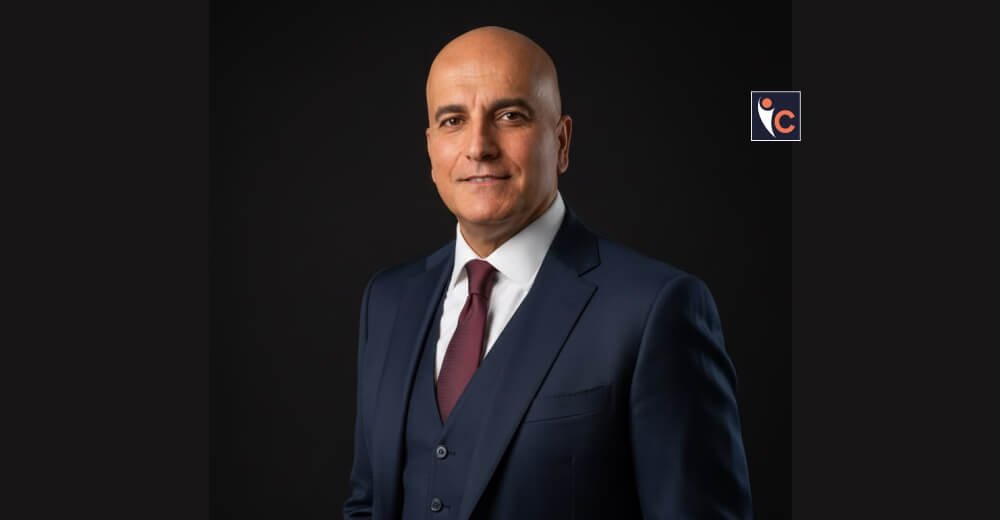
Dr. Ali Keivanjah, an independent Vascular & Endovascular Consultant, has spent more than two decades shaping this space. He has built a career defined by hands-on clinical leadership, interdisciplinary collaboration, and a steady commitment to advancing how vascular care is delivered.
What distinguishes his career is not a single achievement but a consistent pattern of strengthening clinical teams, contributing original research during a global health crisis, and helping shape how hospitals adapt international standards to their own realities. That combination of steady clinical judgment and forward-looking thinking is what makes his perspective worth exploring in depth
Let’s explore how Dr. Keivanjah’s patient-first philosophy, clinical leadership, and commitment to innovation continue to shape the future of vascular and endovascular care!
A Journey Built on Dedication to Patients
Dr. Keivanjah’s journey in vascular and endovascular medicine began more than 25 years ago in Germany, where he started honing his skills across different locations after graduating from medical school at Saarland University in 1992. Over the years, every stage of his career has been guided by a deeply personal philosophy that continues to define his professional outlook today.
Throughout his entire career, he has tried to help every single patient genuinely, just as he would treat a close family member. This patient-oriented approach has required significant effort and energy, sometimes causing his personal life to take a backseat. Yet it remains the foundation upon which he has built decades of clinical practice, leadership, and innovation.
That commitment has naturally evolved into a broader responsibility, not only caring for individual patients but also helping develop healthcare environments where consistently excellent care becomes the standard.
Leadership Through Collaboration and Clinical Excellence
As a Vascular and Endovascular Consultant, Dr. Keivanjah describes his role as a high-responsibility, ongoing professional commitment. The position demands managing diverse tasks accurately while coordinating interdisciplinary care across every procedural stage to ensure the best outcomes for patients with vascular diseases.
At the heart of his leadership philosophy lies an unwavering focus on teamwork.
He believes that “Within the framework of interdisciplinary collaboration, the best possible care for patients should always be at the center, and personal egos should not play a role at all.” Achieving this requires professional communication in a timely manner and adherence to international state-of-the-art protocols that optimize patient treatment.
Rather than viewing leadership as directing individuals, he approaches it as creating an environment where specialists from different disciplines work toward one shared objective: delivering the highest possible standard of patient care through coordinated expertise and mutual respect.
Building Stronger Teams Through International Standards
Beyond treating patients, one of the most significant challenges throughout Dr. Keivanjah’s career has been optimizing the training process for vascular teams, including both doctors and nurses, while implementing international medical standards to achieve the best possible medical care.
He explains that this objective requires tremendous effort and dedication. More importantly, it cannot follow a one-size-fits-all model. Every hospital presents unique capabilities, varying levels of clinical expertise, and different technical resources. Successfully implementing international standards therefore requires carefully organizing training according to each institution’s specific know-how level and technical equipment.
Building on this philosophy, he sees education not as a single initiative but as an ongoing investment that continuously strengthens both clinical capability and patient outcomes.
Keeping Innovation at the Forefront of Clinical Practice
Few specialties experience technological evolution as rapidly as endovascular medicine. For Dr. Keivanjah, staying ahead requires far more than simply following new developments; it demands continuous critical evaluation and practical application.
Navigating the rapid technological shifts in endovascular therapeutics, he explains, requires meticulous appraisal of both vanguard literature and device engineering. His methodology centers on a critical, continuous synthesis of landmark clinical trials alongside updated consensus guidelines from preeminent international societies.
However, he believes “True clinical agility must ultimately be forged inside the angiosuite.”
He prioritizes recurring immersion in specialized, hands-on symposia focusing on hostile anatomical configurations, ranging from advanced pedal arch reconstruction to intricate fenestrated endografting. By bridging the gap between novel biomechanical engineering and real-world anatomy, he safely integrates refined, minimally invasive strategies into institutional practice.
This deliberate commitment to continuing education also extends beyond his own development. By helping surgical teams navigate the steep learning curves associated with frontier technologies, he ensures patient care remains safely at the forefront of the discipline.
Creating Operational Harmony for Better Patient Outcomes
Delivering exceptional patient care while managing extensive clinical, academic, and administrative responsibilities requires a carefully structured approach. Rather than relying on individual task management, Dr. Keivanjah focuses on systemic, algorithmic optimization.
He explains that in the high-acuity environment of endovascular surgery, cognitive fatigue directly impacts perioperative outcomes. To mitigate this risk, he relies heavily on structural delegation and the implementation of standardized, cross-functional clinical pathways.
By cultivating a highly synchronized clinical team, routine perioperative logistics are managed seamlessly, allowing greater cognitive bandwidth for complex intraoperative decision-making and direct patient engagement.
Equally important, he does not view administrative responsibilities or academic commitments as competing priorities. Instead, he considers them synergistic components of clinical practice, explaining that rigorous data collection and institutional governance ultimately refine care models and improve patient outcomes.
This structured, operational harmony enables the pursuit of clinical excellence while maintaining the precision required for increasingly complex vascular interventions.
Pioneering Innovations That Advance the Specialty
Over the course of his career, Dr. Keivanjah has contributed significantly to the advancement of vascular and endovascular medicine through both institutional leadership and clinical innovation.
Among his most meaningful achievements was serving as the long-standing Director of the Vascular and Endovascular Department at Euregio Clinic in Nordhorn, Germany, where he pioneered the development of a Vascular Center within the 500-bed hospital over nearly a decade.
His contributions have also extended into groundbreaking clinical research.
He is honored to be one of the pioneer physicians who identified and reported Post-COVID-19 syndrome as a cause of ischemia of the lower extremities, adding valuable understanding to the medical community during an unprecedented global healthcare challenge.
In addition, he pioneered a novel worldwide first endovascular technique for the treatment of traumatic aortic transection through implantation of a self-expanding nitinol stent with open-cell design in February 2021.
These accomplishments reflect a career dedicated not only to treating today’s patients but also to advancing the future capabilities of vascular medicine itself.
Protecting Personal Well-Being to Sustain Clinical Excellence
Working in an environment where every decision carries significant consequences requires resilience that extends beyond clinical expertise.
For Dr. Keivanjah, maintaining professional equilibrium depends upon deliberate cognitive compartmentalization and emotional fluidity.
Within the clinical domain, he cultivates a persona that balances authoritative operational precision with an accessible demeanor for his multidisciplinary team. At the same time, he recognizes that sustained clinical effectiveness depends upon maintaining a clear separation between professional responsibilities and personal life.
As he explains, “Discerning work from home is not a passive consequence of leaving the hospital; it is an active, structural necessity.”
Upon leaving the angiosuite, he deliberately shifts his attention toward his home life, ensuring his emotional bandwidth remains fully available for his wife and family. Safeguarding this domestic sanctuary ultimately replenishes the resilience required to return to a high-acuity surgical environment with absolute focus.
Guiding the Next Generation of Vascular Specialists
For aspiring physicians considering vascular and endovascular medicine, Dr. Keivanjah emphasizes that technical mastery alone is never sufficient.
He advises future specialists to anchor their technical ambition in a genuine dedication to the patient. While mastery of complex catheter-based mechanics and spatial anatomy is mandatory, true excellence requires rigorous conscientiousness.
As he emphasizes, “You are not merely traversing a vessel; you are safeguarding an individual’s autonomy and livelihood.”
He encourages young professionals to embrace the steep learning curve associated with next-generation device engineering while never allowing technological sophistication to overshadow the human element at the bedside.
Equally important, he recommends cultivating dynamic resilience and committing to collaborative, multidisciplinary care early in residency. Clinical precision, he believes, should always remain a tool, while genuine patient advocacy serves as the guiding compass throughout a medical career.
Shaping the Future of Vascular and Endovascular Medicine
Looking ahead, Dr. Keivanjah sees vascular and endovascular surgery becoming increasingly central to modern healthcare by providing indispensable support across surgical specialties.
Future progress, in his view, will be driven by continued advancement in minimally invasive techniques, expanded predictive AI diagnostics, and effective solutions to workforce shortages affecting healthcare systems globally.
For him personally, however, the future is not about choosing between vascular or endovascular techniques. Instead, he believes in combining both approaches as complementary elements through hybrid procedures that improve treatment outcomes and deliver the best possible medical care for patients. He remains committed to introducing new methods in vascular and particularly endovascular surgery while continuing to contribute meaningful advances to the wider healthcare community.
At the core of every ambition remains the same guiding philosophy that has defined his career for more than two decades: innovation must always serve patients. As he reminds future generations of specialists, “Let clinical precision be your tool, but genuine patient advocacy be your compass.”
Through that enduring commitment, Dr. Ali Keivanjah continues to shape not only the future of vascular medicine but also the standards of leadership, collaboration, and patient-centered excellence that define the profession.
For Further Inquiries, connect at kkeivanjah@icloud.com