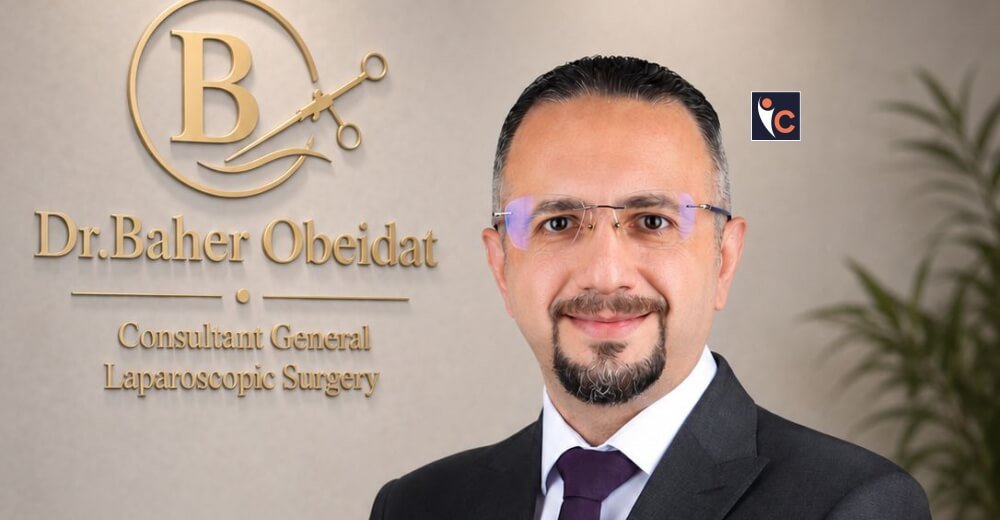
Surgery has changed a lot over the years. Minimally invasive techniques, robotics, and digital tools are now part of the operating room, not something separate from it. Because of that, the role of a surgeon has grown too. It’s no longer just about having steady hands. Judgment plays a big role, knowing when to try something new and when to hold back, because patient safety always comes first. And none of this works without trust, from patients, from the surgical team, from everyone involved.
Dr. Baher Obeidat has spent his career building that trust. He works as a Consultant General and Laparoscopic Surgeon and also leads the Surgical Departments and Operating Theaters. Over the years, his approach has stayed simple: do the surgery well, put the patient first, keep learning, and help the hospital become more reliable and consistent. Whether he’s in the operating room, teaching younger surgeons, or managing the department, the idea stays the same. Skill matters, but it’s not enough on its own. It has to come with care.
Let’s explore how Dr. Baher is advancing surgical excellence through compassionate leadership, continuous learning, and an unwavering commitment to his patients!
A Journey Driven by Purpose
From the very beginning of Dr. Baher’s medical career, he knew that surgery was where he belonged. What attracted him most was the unique opportunity to be both a physician and a surgeon at the same time. Surgery, he explains, combines scientific knowledge, critical thinking, technical precision, and the privilege of making life-changing decisions in moments when patients need help the most.
Among all surgical specialties, he chose General Surgery because of his passion for emergency and trauma care. Every emergency operation continues to remind him why he chose this profession. “There is nothing more rewarding than being able to save a patient’s life during a critical situation,” he emphasizes.
As his career evolved, he realized that being a great surgeon is not only about mastering surgical techniques. It is equally about communication, compassion, leadership, and earning the trust of patients and colleagues. These experiences shaped his philosophy that technical excellence and humanity must always go hand in hand.
Today, alongside his clinical responsibilities as a Consultant General and Laparoscopic Surgeon, he leads surgical departments and operating theaters. Those leadership roles have reinforced his belief that building efficient systems, developing talented teams, and creating a culture of excellence ultimately have a greater impact than any single operation.
Innovation has also become an important part of his professional journey. Becoming the first certified Hybrid Robotic Surgery (DEX) trainer in the Middle East strengthened his belief that surgeons must continue learning throughout their careers. While technology continues to reshape surgery, he believes it should strengthen surgical judgment rather than replace it, with patient safety remaining at the center of every decision.
A Leadership Philosophy Centered on Compassion
Leading in surgery requires precision, collaboration, and timely decision-making, but for Dr. Baher, every decision begins with a simple principle that has guided him since his residency.
He summarizes his philosophy in one sentence: “Treat every patient as if they were a member of your own family.”
It is a principle he has consistently shared with every resident and junior surgeon he has trained. He believes that when surgeons approach patients with this mindset, every decision becomes more thoughtful, every discussion becomes more compassionate, and every operation is performed with greater responsibility.
While surgical skills are essential, he notes that empathy is what distinguishes an excellent surgeon from an exceptional one.
Rather than leading through authority, he believes in leading by example. He encourages teamwork, accountability, open communication, and continuous improvement, recognizing that every member of the healthcare team, from consultants and residents to nurses and operating room staff, plays a vital role in achieving successful patient outcomes.
At its core, he believes the strongest surgical teams are built on trust, mutual respect, and a shared commitment to excellence. By creating an environment where every professional feels respected and responsible, collaboration becomes stronger, and patient care naturally improves.
Innovation with Patient Safety at the Core
Healthcare continues to evolve through minimally invasive techniques, robotic surgery, and changing patient expectations. While Dr. Baher embraces innovation, he believes it should never be adopted simply because it is new. Every new technology must ultimately serve one purpose: improving patient care.
Actively involved in minimally invasive and robotic surgery, he believes innovation and patient safety must always progress together. Every new technique, device, or technology should be evaluated through scientific evidence, proper training, and measurable clinical outcomes before becoming part of routine practice.
He emphasizes, “Our responsibility is not only to perform advanced surgery but also to ensure that every patient receives the safest and most appropriate treatment.”
This philosophy shapes the culture he encourages within his teams. Curiosity and continuous education are essential, but they must always be supported by evidence-based medicine. Technology is a powerful tool, yet sound clinical judgment, ethical decision-making, and surgical experience remain irreplaceable.
For him, true innovation is measured not by how quickly new technologies are adopted, but by how effectively they improve patient outcomes while preserving the trust patients place in their healthcare teams.
A Defining Experience That Strengthened His Leadership
Throughout his career, Dr. Baher has managed many difficult surgical emergencies where precision and timely decision-making were essential. Yet the experience that shaped him most as a leader did not occur inside an operating room; it came when his own father became his patient.
His father developed an enlarged lymph node, and after examining him, he became concerned that it could be lymphoma. As both a son and a surgeon, he found himself balancing medical knowledge with emotional responsibility. While arranging the necessary biopsy and awaiting a definitive diagnosis, he deliberately focused on reassuring his father rather than allowing fear to dominate the conversation.
The experience left a lasting impact.
It reminded him that patients experience uncertainty, fear, and vulnerability in ways healthcare professionals can sometimes underestimate. Since then, he has become even more mindful of how he communicates serious diagnoses, believing that while patients deserve honesty, they also deserve hope, reassurance, and compassion.
Reflecting on that moment, he shares, “Empathy is not separate from medicine—it is an essential part of excellent medical care.”
Developing Future Surgical Leaders
Teaching has always been one of the most rewarding aspects of Dr. Baher’s career. Beyond passing on technical knowledge, he aims to develop surgeons who think critically, act responsibly, and place patients at the center of every decision.
Rather than encouraging residents to memorize surgical steps, he wants them to understand why decisions are made, not simply how operations are performed. Alongside technical training, he emphasizes professionalism, humility, accountability, and respect. While surgical skills can be taught, he believes integrity and compassion must become part of a surgeon’s character.
Creating a supportive learning environment is equally important. He believes “Mistakes should become opportunities for learning rather than occasions for blame.” When young surgeons feel comfortable asking questions and learning from experience, they develop confidence while maintaining patient safety.
Building Trust Through Teamwork
For Dr. Baher, excellent patient care is always a team achievement. He believes communication is the foundation of every successful surgical service.
Whether working with anesthesiologists, intensivists, emergency physicians, nurses, or operating room staff, he believes every professional should feel respected and empowered to contribute. Open discussion before surgery, honest communication during procedures, and constructive feedback afterward strengthen both teamwork and patient outcomes.
As he explains, “Every member of the team should understand that patient safety is our shared responsibility.”
When people trust one another and communicate openly, better decisions are made, complications are reduced, and patients receive higher-quality care. Creating that culture of trust remains one of the most important responsibilities of healthcare leadership.
Creating Lasting Value Beyond Individual Achievement
The achievement Dr. Baher is most proud of is not a particular operation or title. Instead, it is helping build a surgical department that earned a strong reputation for quality, teamwork, professionalism, and patient trust despite numerous operational challenges.
Healthcare leaders, he believes, create lasting value by building systems rather than relying on individuals. When processes improve, communication strengthens, and people work toward a common vision, patients benefit the most. Sustainable success is achieved by creating an environment where excellence becomes part of the culture rather than the accomplishment of a few individuals.
Watching younger surgeons grow professionally, seeing departments become more efficient, and knowing that patients have confidence in the care being provided are the achievements that bring him the greatest satisfaction. As he reflects, “Leadership is ultimately about creating a culture that continues to succeed long after you leave.”
For Dr. Obeidat, this philosophy defines leadership at its highest level. The true measure of success is not personal recognition, but leaving behind stronger teams, better systems, and a culture capable of continuing to serve patients with excellence for years to come.
Looking Ahead: Advancing the Future of Surgery
As surgery continues to advance, Dr. Baher believes the next decade will be defined by robotics, artificial intelligence, augmented visualization, and data-driven decision-making. While these developments promise to transform surgical practice, his focus extends beyond simply adopting new technologies.
His ambition is to contribute to their advancement while ensuring that every innovation continues to improve patient outcomes. He aspires to become an internationally recognized leader in laparoscopic and robotic surgery, helping train future generations of surgeons while contributing to the development of innovative surgical techniques that improve patient outcomes.
At the same time, he believes tomorrow’s surgical leaders will be those who combine clinical excellence with scientific curiosity, innovation, and continuous education. Remaining a lifelong learner, embracing research, and sharing knowledge through education are, in his view, essential responsibilities for every surgeon who hopes to make a lasting contribution to the profession.
A Legacy Defined by Humanity
When asked how he hopes to be remembered, Dr. Baher’s answer reflects the values that have guided his entire career. Rather than focusing on the number of operations he has performed or the leadership positions he has held, he hopes his legacy will be measured by the lives he has touched.
He wishes to be remembered through the prayers of his patients, by helping relieve their pain, and by leaving behind a reputation built on honesty, compassion, and excellence. If patients and colleagues remember him as someone who genuinely cared, treated every patient like family, and always placed humanity before prestige, he will consider his career a success.
Professionally, he also hopes to leave a lasting contribution to surgery by helping develop innovative surgical techniques and becoming a global reference in laparoscopic and robotic surgery through education, research, and mentorship.
His advice to aspiring surgeons reflects the principles he has lived by throughout his career. He encourages them to remain lifelong learners, never allow confidence to become arrogance, and always remember that every patient is someone’s mother, father, son, or daughter.
As he reminds future surgeons, “Treat them exactly as you would want your own family to be treated.”
For him, surgical skill can heal the body, but compassion is what truly heals the patient. It is this balance between technical excellence and humanity that defines meaningful leadership in medicine.
Balance Beyond the Operating Room
Although surgery is a demanding profession, Dr. Baher believes maintaining balance is essential. Whenever possible, he dedicates his free time to his family. Because of the nature of surgical practice, he cannot always give them the amount of time they deserve, making every shared moment especially meaningful.
He also enjoys playing video games, which help him disconnect from the pressures of work, recharge mentally, and return with renewed focus and energy. For him, maintaining personal well-being ultimately allows him to become a better surgeon, leader, husband, and father, reinforcing the belief that caring for others begins with caring for oneself.
Leading with Precision, Healing with Compassion
Throughout his career, Dr. Baher Obeidat has remained guided by a philosophy that places compassion alongside clinical excellence. From emergency and trauma care to minimally invasive and robotic surgery, from mentoring young surgeons to leading departments and operating theaters, his approach reflects a consistent commitment to patient-centered care, continuous learning, and responsible leadership.
His experiences have reinforced that exceptional healthcare is built on trust, communication, teamwork, and ethical decision-making. Whether embracing innovation, strengthening healthcare systems, or preparing the next generation of surgeons, he believes lasting impact comes from creating a culture where excellence and humanity exist together.
His personal motto captures this philosophy and the legacy he hopes to leave:
“Treat every patient as if they were a member of your own family. Surgical excellence saves lives, but compassion gives those lives hope.”
As surgery enters a new era of technological advancement, Dr. Baher continues to demonstrate that the future of healthcare will not be defined by innovation alone, but by leaders who combine precision with compassion and ensure every advancement serves its greatest purpose, improving patients’ lives.