Arab healthcare systems are in transition. New technologies are standard, not experimental. Regulations demand more precision. Patients arrive with information and expectations their parents never had. They research conditions, compare treatment options, and ask detailed questions. Insurance providers require comprehensive documentation. Governments are pushing for greater transparency and accountability. Healthcare institutions must adapt to all of this simultaneously.
Leadership in this context requires more than clinical expertise or financial acumen. It requires an understanding of technology, policy, ethics, and operations. The decisions being made affect patient access, institutional sustainability, and community trust. These are not abstract concerns. They play out in real outcomes. Much of this work happens away from public view. It doesn’t generate headlines, but it shapes how effectively a hospital runs, how fairly patients are treated, and whether the system itself remains viable.
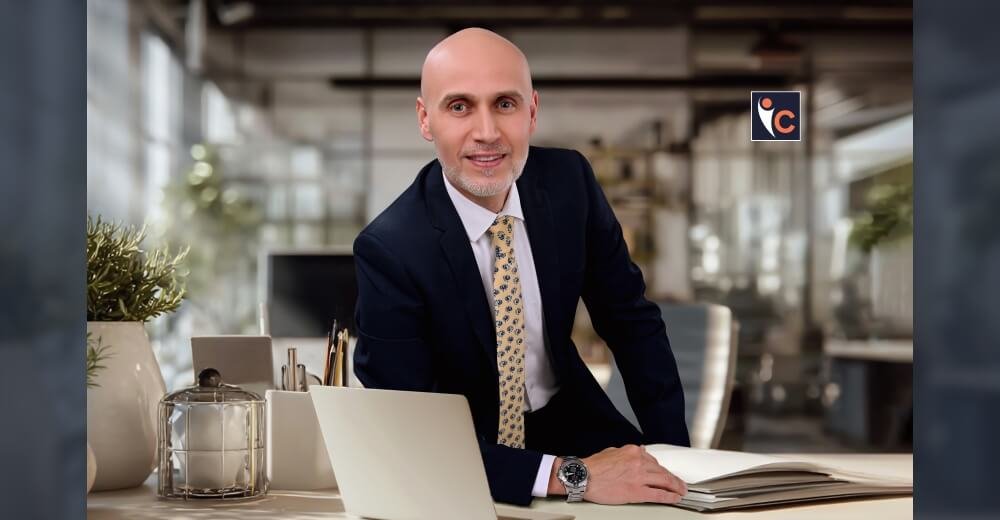
Dr. Josef Hanna has worked in UAE healthcare for over twenty years. He currently serves as an Independent Consultant for an AI Empowered IT RCM solution, Mantys, a YC-backed startup led by founder and CEO Kriti Arora. His career has spanned the transition from paper-based processes to digital infrastructure. He understands the technical requirements of modern healthcare administration, and his approach goes beyond technical competence.
Revenue cycle management involves billing, claims processing, and compliance. It sounds purely operational. In practice, it determines whether patients can access care, whether clinics remain financially stable, and whether the system functions with integrity.
Dr. Hanna has built systems that address both sides of that equation. The operational and the human. The measurable and the meaningful. His work reflects a broader truth about healthcare leadership: technical skill matters, but so does judgment about what those systems are meant to serve.
Let’s explore how Dr. Hanna is shaping modern healthcare with vision, empathy, and systems that truly work!
A Life Influenced by Medicine
Dr. Hanna’s journey in healthcare started long before he became a professional. Growing up, medicine was part of everyday life. His father was a physician, and his mother had worked as a midwife before she married. Even after she stopped practicing, their home was still filled with stories from the hospital, medical discussions, and a deep respect for patient care. From an early age, he was surrounded by the world of medicine, and it quietly shaped his understanding of care, responsibility, and the human side of health.
This upbringing naturally shaped his interests. He developed a strong curiosity about patient care, human anatomy, and how the human body works. These early influences led him to study medicine at Damascus University, Faculty of Medicine, where he graduated in 1998. After completing medical school, he practiced as a physician for several years, gaining firsthand experience in patient care and clinical responsibility.
Later, he spent two years in the United States. This exposure broadened his understanding of healthcare systems beyond clinical practice. In 2004, he moved to the UAE, a decision that would define the next chapter of his professional life.
Discovering Healthcare Beyond the Clinic
When Dr. Hanna arrived in Abu Dhabi, the healthcare system was entering a phase of major development. Around 2005 and 2006, the Emirate began introducing structured revenue cycle systems, clinical coding standards, and financial reporting models inspired by the United States healthcare system. These changes were initially focused on reporting and regulation, but they gradually reshaped how hospitals operated.
As a physician, he was fascinated by this transformation. He began to see how healthcare functioned beyond the consultation room. He realized that financial and operational systems had a direct impact on patient care quality. Efficient processes could reduce delays, improve access, and support better clinical outcomes.
This realization marked a turning point. In 2007, he decided to formally develop his management skills. He enrolled in a Healthcare Management Master Program at the Royal College of Surgeons in Ireland in Dubai, completing two years of focused study. After this, he made a deliberate shift away from clinical practice and into healthcare management, combining his medical background with operational and strategic leadership.
Working Through the Era of Paper and Fax
Dr. Hanna began his revenue cycle journey at AI Noor Hospital on Khalifa Street, which was later acquired by Mediclinic. At that time, revenue cycle management was entirely manual. There were no advanced digital platforms or automated submissions. Claims were paper based. Doctors filled out forms by hand. Diagnostic codes were added manually by staff. Insurance approvals were received by fax.
Inpatient cases created particularly heavy workloads. Long hospital stays meant thick files filled with reports, notes, and forms. At the end of each month, rooms were filled with boxes of claims waiting to be sent to insurance companies such as Daman, the national health insurance provider established in 2006. These boxes were physically transported, opened, and reviewed by insurance teams.
The process was demanding in every way. Yet it provided invaluable learning. During this period, Dr. Hanna worked closely with the IT Department and became part of the team that successfully submitted the first XML insurance claim to the Department of Health, then known as the General Authority of Health. This achievement represented a key moment in the digital transformation of healthcare claims in Abu Dhabi.
Learning Discipline in High-Risk Care
After AI Noor Hospital, Dr. Hanna moved to Corniche Hospital, one of the region’s oldest and most respected maternity hospitals. He joined as Director of Revenue, stepping into an environment where precision and safety were always essential. In maternity care, there is no room for operational failure. Every system must support clinical teams without creating delays or confusion.
At Corniche Hospital, he applied what he had learned through his healthcare management education. He worked on implementing systems, improving workflows, and aligning teams across departments. Front desk staff, physicians, coders, and insurance submission teams were brought together under shared processes and clear responsibilities.
This experience reinforced an important truth. Revenue cycle management is not separate from patient safety. When systems are unclear or inefficient, patient care suffers. Strong operational support allows clinicians to focus fully on their patients.
Building a Hospital from the Ground Up
In 2014, Dr. Hanna joined Danat Al Emarat Hospital for Women and Children before it became operational. This role offered a rare opportunity to design an entire revenue cycle framework from the beginning. Every element had to be built from scratch. This included policies, procedures, hiring plans, system selection, implementation, optimization, and insurance contracting.
Over more than ten years, he helped shape the hospital’s operational foundation. The focus was always on accuracy, compliance, and collaboration between clinical and administrative teams. During his tenure at Danat Al Emarat, the denial rate has reduced to a very low percentage, a result that reflects strong systems and disciplined execution.
This period marked his professional maturity in revenue cycle management. It also demonstrated how well-designed processes can support both financial stability and high-quality patient care.
A Broader View of Revenue Cycle Management
For Dr. Hanna, revenue cycle management is not simply a financial function. It plays a critical role in transparency, regulation, and patient trust. He believes strongly that systems should support care, not control it. As he explains, “Human touch can never be replaced by digital or AI-driven systems.”
Healthcare is fundamentally different from other industries. In healthcare, mistakes affect people, not products. Revenue cycle management cannot and should not dictate clinical decisions. What it can do is provide structure, ensure compliance, and reduce unnecessary or inappropriate practices.
Patients today are informed and engaged. They research treatments, ask questions, and expect clarity in billing and insurance coverage. Revenue cycle systems help support this transparency. They also reduce fraud by enforcing regulatory standards and encourage value-based care that focuses on outcomes rather than volume.
Ethics and Responsibility in Leadership
Healthcare in the UAE largely follows a for-profit model. Without strong revenue cycle practices, even well-intentioned institutions may struggle to survive. For Dr. Hanna, this reality makes revenue cycle management essential to healthcare sustainability.
At the same time, ethical responsibility remains central. Leaders must always ask whether a test or procedure is truly necessary. They must consider whether they would make the same choice for themselves or a family member. As he emphasizes, “Healthcare is about people, not just numbers.”
The integration of automation, analytics, and artificial intelligence presents new challenges. Even the most advanced systems will fail if people are not prepared to use them. Cultural readiness, training, and communication are as important as technology itself.
Preparing for Intelligent Health Systems
The UAE is moving rapidly toward intelligent health systems with real-time claims monitoring and advanced fraud detection. After COVID, many new regulations were introduced to control unnecessary spending and improve accountability. Digital transformation is no longer optional.
Dr. Hanna advises healthcare leaders to understand the system as a whole. Clinical, administrative, financial, and technical functions are deeply connected. Data and AI are powerful tools, but leadership and empathy remain essential. As he reminds us, “We must remain human.”
Continuous learning is critical. Certifications, training, and staying informed about industry changes help leaders adapt to evolving expectations. The shift toward paperless and fully digital systems is ongoing and requires long-term commitment.
The Future of Healthcare in the Region
Healthcare in the UAE is advancing rapidly, supported by government investment and strong regulatory frameworks. Technologies that once seemed distant are now becoming part of daily operations. Provider and payer integration, population health analytics, and intelligent health platforms are shaping the future.
Revenue cycle management will become increasingly automated, allowing faster reimbursements and improved transparency. Yet efficiency must always be balanced with compassion. Dr. Hanna’s leadership philosophy reflects this belief. As he states clearly, “Efficiency should never come at the expense of empathy.”
A Guiding Principle That Endures
As Dr. Hanna reflects on his career, one principle stands above all others. Healthcare must always remain human. Systems, data, and technology are tools, not replacements for compassion and judgment.
From his early days in clinical practice to his leadership roles across major institutions, his journey reflects dedication, responsibility, and respect for patients. It is this balance of insight, discipline, and empathy that places him among the Arab world’s most iconic healthcare leaders to watch in 2026.