Healthcare today is changing rapidly, shaped by new technology, rising patient expectations, and a stronger focus on less invasive treatments. In surgery, this shift is especially clear. Doctors are now aiming for greater precision, quicker recovery, and better overall results for patients. These changes are transforming how both simple and complex procedures are performed, making care more efficient and patient-friendly.
In this changing environment, general and laparoscopic surgery has become an important part of modern healthcare. By combining medical expertise with advanced techniques, surgeons can treat a wide range of conditions while reducing pain and recovery time for patients. As healthcare systems focus more on quality and efficiency, the need for skilled surgeons who can adapt and keep up with these changes is more important than ever.
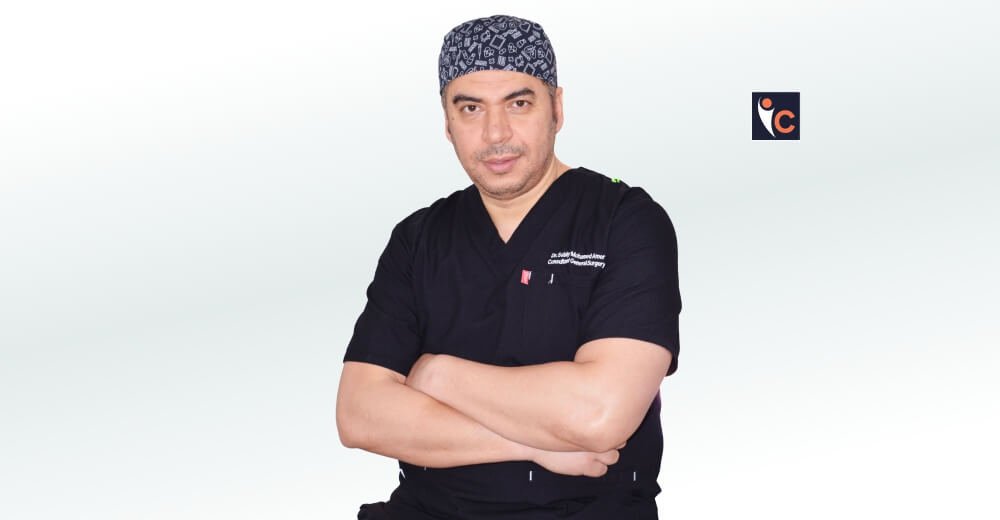
At the forefront of this evolving field is Dr. Sobhy Mohamed Ismail, Consultant General & Laparoscopic Surgeon at HMS Al Garhoud Hospital. With a strong commitment to patient-centered care and surgical excellence, he seamlessly integrates innovation with clinical precision. His work reflects a deep understanding of both traditional surgical principles and modern advancements that enhance patient experiences.
Dr. Sobhy’s approach positions him as a key contributor to the ongoing evolution of surgical care, where expertise, adaptability, and compassion intersect. His journey offers valuable insight into how surgical leadership continues to shape the future of healthcare.
Let’s explore how Dr. Sobhy Mohamed Ismail is redefining surgical outcomes with advanced techniques.
A Journey Built on Dedication and Continuous Growth
For Dr. Sobhy Mohamed Ismail, the path into surgery was not originally predetermined. Reflecting on his professional beginnings, he explains that his journey started more than 20 years ago when he entered the residency program in general surgery. From there, his academic and clinical progression continued steadily through obtaining a master’s degree in general surgery, followed by a PhD degree, alongside multiple professional diplomas and workshops.
Yet, even after decades in the field, he believes the learning process should never stop. As he notes, “The journey should be non-stop to keep myself updated and not old fashion surgeon.”
Interestingly, surgery was not initially among his preferred career paths before internship training. However, exposure to highly skilled surgeons during that period changed his perspective and inspired him to pursue the specialty. Watching talented surgeons at work and learning from them during his internship played a defining role in shaping his future career.
That early inspiration ultimately shaped a career defined by both technical expertise and purpose. He chose general surgery because of the immediate impact it creates in patients’ lives. As he explains, “I chose General Surgery because of the immediate impact it has on a patient’s life; often, you can solve a problem with your own hands.”
Over the years, this philosophy has continued to guide his work, reinforcing his belief that surgery is not only about procedures and outcomes, but also about responsibility, trust, and direct human impact.
Building Excellence Within HMS Group
Dr. Sobhy Mohamed Ismail describes the Health and Medical Services Group as his “second home,” emphasizing that after joining the organization eight years ago, it became a part of his family.
Today, the HMS Group has established itself as a major force within the UAE’s premium healthcare sector through institutions including HMS Al Garhoud Hospital, HMS Mirdif Hospital, HMS FIFA Medical Centre, and HMS DxBone. He explains that these facilities provide advanced medical infrastructure, multidisciplinary expertise, and a patient-centric approach that supports both local communities and the region’s expanding medical tourism sector.
Established in 2012, HMS Al Garhoud Hospital quickly demonstrated its commitment to international standards by securing Joint Commission International accreditation in its opening year. He highlights that the hospital also became the first hospital globally to receive the Emirates International Accreditation Center Hospital Accreditation. Strategically located near Dubai International Airport, it has evolved into a major healthcare destination serving patients from across the UAE and GCC region.
The hospital’s advanced infrastructure includes fully equipped operating theaters, a specialized NICU capable of caring for premature infants from 24 weeks, advanced diagnostic imaging systems, and minimally invasive surgical technologies that help reduce recovery times and improve patient outcomes.
Meanwhile, HMS Mirdif Hospital represents the group’s modern expansion into luxury, technology-driven healthcare delivery. Featuring over 45 medical and surgical specialties, advanced diagnostic systems, specialized critical care units, and integrated multidisciplinary treatment pathways, the facility reflects HMS Group’s broader commitment to innovation and personalized care.
Together, the two hospitals anchor an Emirati-owned healthcare network that serves more than 500,000 patients annually from over 80 nationalities. Through investment in telehealth infrastructure, research collaborations, and continuous medical education, the HMS Group continues advancing Dubai’s vision as a global destination for sophisticated medical care.
Within this ecosystem, he defines his own role with clarity and responsibility. “At HMS Al Garhoud Hospital, I view my role as a guardian of safety,” he says. For him, quality care extends far beyond the operating room itself. “Quality care isn’t just about a successful operation; it’s about the patient’s journey from the first consultation to the final follow-up.”
He believes surgical excellence is achieved through the consistent application of evidence-based techniques combined with a personalized, patient-first approach. This philosophy continues to shape his work within the department and contributes to maintaining high standards of care across the organization.
Leadership Under Pressure
Few medical environments demand the level of focus, coordination, and decision-making required inside an operating room. In these high-pressure situations, leadership becomes inseparable from patient safety and clinical success.
For Dr. Sobhy Mohamed Ismail, effective leadership begins with emotional control and clear communication. “In the operating room, leadership is defined by ‘calm under pressure,’” he explains.
Central to his approach is the principle of Closed-Loop Communication, ensuring that every instruction, observation, and suggestion is acknowledged clearly within the surgical team. He believes surgery is never an individual effort, but rather a collaborative process where the entire team, from the anesthesiologist to the scrub nurse, works together toward the same goal.
This collaborative culture plays a vital role in maintaining both efficiency and trust during complex procedures. In his view, when medical teams feel respected and confident, performance naturally improves. “When the team feels respected and confident, they perform at their peak, which directly translates to better patient outcomes.”
His leadership philosophy reflects a broader understanding that surgical excellence depends not only on technical expertise but also on teamwork, communication, and mutual respect among healthcare professionals.
Turning Challenges into Growth
Over the course of Dr. Sobhy Mohamed Ismail’s career, some of the most defining moments have emerged from situations where standard approaches alone were insufficient. The greatest challenges, in his experience, often involve complex cases where the textbook solution is not enough.
Rather than discouraging him, these experiences strengthened his commitment to preparation and adaptability. They also reinforced the importance of humility in medicine, reminding him that every patient case carries unique variables and uncertainties.
As a result, his approach to surgery evolved significantly over time, encouraging him to dedicate greater attention to preoperative planning, reading, searching, continuous learning, and patient education to ensure preparation for every possible variable.
This mindset reflects an important principle in modern surgery, where preparation is often as critical as the operation itself. By investing deeply in planning and communication before procedures begin, he continues working toward safer and more predictable outcomes for both patients and surgical teams alike.
Staying Ahead in an Evolving Surgical Landscape
Advancements in laparoscopic surgery continue to transform how procedures are performed, reducing recovery times, minimizing complications, and improving overall patient experiences. However, remaining current within such a rapidly evolving field requires continuous education and professional engagement.
For Dr. Sobhy Mohamed Ismail, staying updated is not optional; it is essential. “Surgery is a field of constant evolution; if you stop progressing, you fall behind,” he says.
To remain at the forefront of surgical innovation, he regularly participates in international surgical conferences, maintains membership in global surgical societies, and follows scientific journals closely. At the same time, he strongly values practical learning environments that encourage collaboration among physicians.
He emphasizes the importance of hands-on training and interactive workshops among physicians, particularly as minimally invasive surgery continues to advance through robotic platforms and AI-driven technologies.
This commitment to lifelong learning reflects a broader professional philosophy that growth in medicine must remain continuous. In a specialty where technologies and techniques evolve rapidly, maintaining excellence requires constant adaptation, curiosity, and openness to innovation.
The Human Side of Surgery
Despite the demanding nature of surgical practice, Dr. Sobhy Mohamed Ismail believes maintaining personal well-being is essential for sustaining professional performance and patient care.
For him, work-life balance is not measured simply through equal distribution of time. Instead, it is defined by presence and focus. “For me as a surgeon, work-life balance isn’t about ‘equal hours’ as it is about ‘mental presence,” he explains.
When inside the hospital environment, he remains fully focused on patient care and surgical responsibilities. However, outside the operating room, he prioritizes activities that help maintain both mental clarity and physical energy.
To maintain this level of focus, he tries to dedicate time to physical fitness and spend time with his family to recharge. He also emphasizes the importance of self-care within the medical profession, believing that taking care of oneself is essential in order to properly care for others.
The discipline he applies to his personal routine, including exercise, reading, and travel, ultimately contributes to his professional readiness and ensures that he enters the operating room with a clear mind and high concentration.
Recognition, Growth, and Professional Milestones
Across his years in surgery, several milestones have carried particular personal and professional significance for Dr. Sobhy Mohamed Ismail. Among them, obtaining his PhD degree stands out as one of the most meaningful achievements in his journey.
Equally important was his advancement to consultant surgeon status, a transition that expanded both his responsibilities and opportunities within the medical community.
Becoming a consultant surgeon opened the door for him to participate in conferences, workshops, and scientific meetings, while also allowing him to share experiences and knowledge with colleagues in the same field.
These opportunities for professional exchange have become an important aspect of his growth, reinforcing his belief in collaboration, continuous learning, and the value of shared expertise across the surgical community.
Building Trust Through Communication
In surgery, trust is often established long before a patient enters the operating room. For Dr. Sobhy Mohamed Ismail the most important period for building that trust is between diagnosis and procedure.
Especially in complex cases, he prioritizes communication that is honest, transparent, and easy for patients and families to understand. Rather than relying heavily on technical terminology, he focuses on clarity and reassurance.
“I avoid complicated medical terms and use clear, simple language to ensure the patient and their family fully understand the treatment plan,” he explains.
Transparency is another cornerstone of his communication philosophy. He believes patients deserve a complete understanding of both risks and expectations before surgery takes place, making it important to discuss risks with complete transparency while clearly outlining the plan of action for success.
Advice for the Next Generation of Surgeons
Having spent decades in a field that demands resilience, discipline, and constant adaptation, Dr. Sobhy Mohamed Ismail believes aspiring surgeons must focus on far more than technical ability alone.
“Technical proficiency is fundamental, but empathy and perseverance are what build a successful career,” he says.
At the center of his advice is the importance of maintaining a lifelong learning mindset. He encourages young surgeons to remain adaptable and intellectually curious throughout their careers, particularly as medicine continues evolving at a rapid pace.
“My advice is to remain a ‘lifelong learner,’” he explains. “This field is evolving rapidly, and the moment you think you’ve mastered it is the moment you stop growing.”
For him, long-term success in surgery ultimately depends not only on precision inside the operating room, but also on character and consistency outside of it. He emphasizes that success is not just about how skillfully a surgeon wields a scalpel, but also about the integrity and care demonstrated in their work every single day.
Envisioning the Future of Surgical Care
Looking ahead, Dr. Sobhy Mohamed Ismail sees enormous potential in the continued integration of artificial intelligence and robotic technologies within surgical practice. His long-term professional vision centers on leveraging these advancements to make high-level surgical care more efficient, precise, and accessible.
“My long-term vision centres on the integration of AI-driven diagnostics and robotic surgery to make high-level surgical care more accessible and effective,” he explains.
At the same time, he believes the future of minimally invasive surgery should not remain limited to select institutions or patient groups. Instead, he hopes to contribute to what he describes as the “democratization” of these technologies, ensuring that more patients can benefit from advanced surgical care regardless of background or geography.
As healthcare systems around the world continue evolving, leaders like Dr. Sobhy Mohamed Ismail represent a new generation of surgeons who combine technical excellence with compassion, innovation, and lifelong learning. Through his work at HMS Al Garhoud Hospital and the broader HMS Group network, he continues helping shape a future where precision surgery, patient-centered care, and advanced technology work together to deliver safer and more effective outcomes for patients across the region and beyond.
Read More: Dr. Mazen Sabah: UAE’s Leading Specialist in Neuro-Ophthalmology