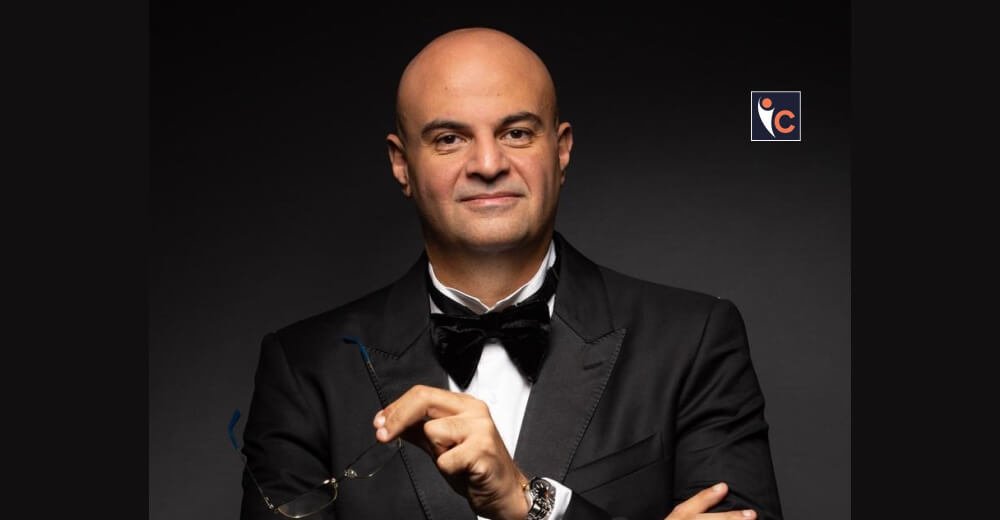
Surgery continues to evolve as advances in technology, minimally invasive techniques, and multidisciplinary care reshape what patients can expect from treatment. Yet even as surgical innovation creates new possibilities, the foundations of good surgery remain rooted in judgment, precision, continuous learning, leadership, and responsibility toward the patient.
For Professor Dr. Tamer Said Salama, these principles have shaped more than 25 years of surgical and academic experience across general surgery, advanced laparoscopy, bariatric and metabolic surgery, and proctology. As Consultant General, Laparoscopic, Bariatric & Proctology Surgeon at Saudi German Health UAE and Professor of Surgery at Ain Shams University, he brings together the perspectives of surgeon, academic, educator and mentor.
His career reflects a commitment to patient-centered excellence while advancing minimally invasive surgery, surgical education, research, and structured Centers of Excellence.
Let’s explore how Dr. Tamer’s experience, leadership, and commitment to innovation are helping shape the future of surgical care!
A Journey Shaped by Surgical Innovation
Dr. Tamer’s interest in laparoscopic surgery developed during a transformative period in modern surgery, when minimally invasive techniques began changing what patients could expect from an operation. The possibility of performing complex procedures through smaller incisions with less postoperative pain, faster recovery, shorter hospital stays, and earlier return to normal life was compelling.
Yet what attracted him most was not simply the technology, but the precision and discipline it demanded. As he explains, “Minimally invasive surgery is not about making smaller incisions. It is about achieving the best surgical outcome with the least possible impact on the patient.”
That philosophy continues to shape his approach today. Every patient journey begins with accurate diagnosis and careful selection of the most appropriate treatment. This includes evaluating whether surgery is truly necessary, choosing the optimal technique, anticipating potential complications, and ensuring structured postoperative follow-up.
Excellence Beyond the Operating Theatre
For Dr. Tamer, modern surgery cannot succeed as an isolated specialty. Complex cases require close collaboration between surgeons, anesthesiologists, radiologists, gastroenterologists, intensivists, nursing teams, dietitians, physiotherapists, and other specialists.
Multidisciplinary decision-making is particularly important in bariatric surgery, advanced gastrointestinal disease, complex proctology, emergency surgery, and trauma. In this context, surgical excellence becomes a collective responsibility, built through teamwork, standardized pathways, measurable outcomes, patient safety, and continuous improvement.
This philosophy has also shaped his contribution to developing surgical excellence within Saudi German Hospital Dubai. He has been closely involved in programs recognized as Centers of Excellence in Bariatric & Metabolic Surgery, Minimally Invasive Surgery, and Proctology. For him, excellence is based not on individual performance alone, but on systems that consistently support better patient outcomes.
Research, Learning, and Academic Authority
Continuous education remains central to Dr. Tamer’s career. He follows developments in minimally invasive surgery through international scientific meetings, peer-reviewed literature, professional societies, surgical workshops, academic collaboration, and clinical research.
With more than 50 international scientific publications, he views research not as separate from clinical practice but as an essential mechanism for questioning established approaches and improving patient outcomes. His academic role at Ain Shams University further strengthens this connection between clinical experience, research, and education.
Among his most meaningful professional recognitions are his accreditations through the Surgical Review Corporation (SRC). He has achieved Master Surgeon accreditation in Bariatric & Metabolic Surgery, Minimally Invasive Surgery, and Proctology. These recognitions are valuable to him not simply as titles, but because they represent external validation of structured quality, experience, outcomes, and commitment to international standards.
Building Surgeons, Not Just Performing Surgery
Leadership is an equally important part of Dr. Tamer’s professional philosophy. His belief is clear: “A successful surgeon should not only create successful operations. He should help create successful surgeons.”
Mentoring younger doctors is therefore one of the most meaningful aspects of his career. He was the initiator of the Arab Board of Surgery training program at Saudi German Hospital, supporting a structured environment for postgraduate surgical education.
His approach to mentorship emphasizes technical competence, decision-making, professionalism, accountability, communication, and knowing when not to operate. Rather than viewing leadership only through personal achievement, he sees it as an opportunity to build the capabilities of the next generation.
His career has also included leadership responsibilities in trauma and surgical quality. In emergency and complex surgery, he has encountered situations where decisions must be made rapidly, sometimes with incomplete information. These experiences strengthened one principle above all: patient safety must always come before ego, routine, or technical ambition.
Advancing Proctology and Centers of Excellence
A particularly significant milestone has been Dr. Tamer’s contribution to advancing proctology as a recognized field of surgical excellence. He initiated the concept and contributed to the development of the SRC framework and guidelines for a Proctology Center of Excellence, helping establish structured standards for evaluating excellence in this field.
Saudi German Hospital Dubai subsequently became home to a Proctology Center of Excellence, an achievement of particular significance for the region. The milestone reflects his broader commitment to creating systems where excellence is measurable, structured, and sustained rather than dependent on individual performance.
Balance, Responsibility, and the Future of Surgery
Despite the demands of surgery, academia, research, leadership, and emergency care, Dr. Tamer believes that longevity in medicine requires perspective. Maintaining time for family, personal health, reflection, and interests outside the hospital allows surgeons to return to their patients with greater focus and clarity. Balance does not necessarily mean equal time; it means protecting what keeps a physician physically, mentally, and emotionally capable of giving his best.
Looking ahead, he aims to continue advancing minimally invasive surgery, strengthening structured Centers of Excellence, expanding surgical education and research, and mentoring the next generation of surgeons. He is particularly interested in how technology, advanced imaging, robotics, artificial intelligence, and data-driven quality measurement can make surgery safer and increasingly personalized.
His advice to aspiring surgeons remains straightforward: never chase titles before competence, and never allow confidence to replace preparation. Learn continuously, respect every member of the healthcare team, study complications as carefully as successes, and remember that behind every operation is a person who has entrusted you with something irreplaceable: their health.
After more than two decades in surgery, his definition of success has become increasingly simple: “Excellence is not a title that a surgeon claims. It is a standard that must be earned, patient by patient, operation by operation, and year after year.”
For Dr. Tamer Said Salama, that standard continues to define the intersection of experience, innovation, education, and patient-centered surgical excellence.