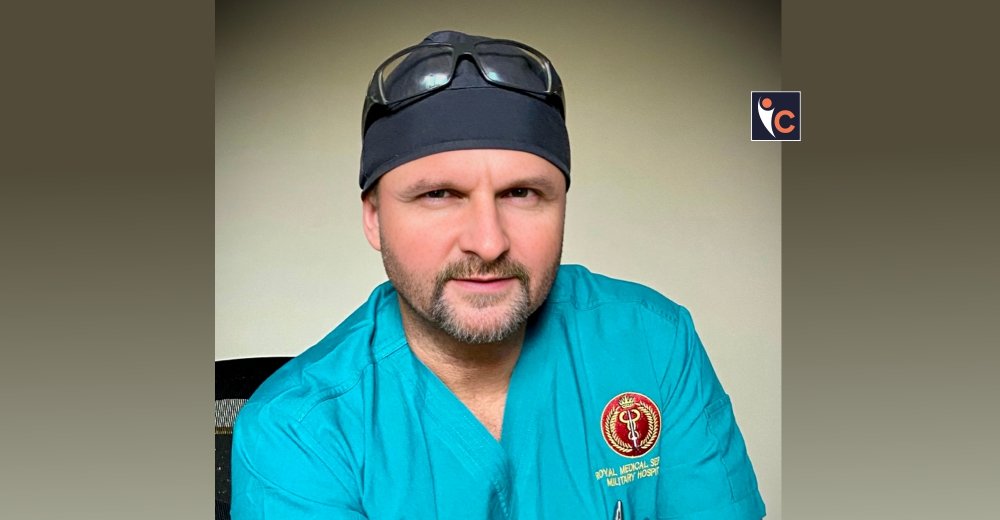
In a field where precision, experience, and decisive action can directly shape patient outcomes, Prof. Martin Maresch, Senior Consultant Vascular & Endovascular Surgeon, has built a distinguished career around advancing the possibilities of modern vascular care.
For Prof. Martin Maresch, the path to medicine began with an influential example close to home. His father, a now-retired and highly respected Head of an Orthopedic Department, gave him an early understanding that medicine is more than a profession; it is a lifelong commitment to patients, responsibility, and continuous learning. Inspired by this example, Prof. Martin Maresch entered cardiovascular and vascular surgery approximately three decades ago, drawn to the specialty’s combination of complex decision-making, precise anatomy, technical skill, and the opportunity to make an immediate difference in patients’ lives.
Before moving to the Middle East, he led the Vascular Surgery Division at Charles University Hospital, one of Europe’s largest university hospital systems. After gaining experience in Saudi Arabia, he joined BDF Hospital – Royal Medical Services in Bahrain in 2012, where he has played an important role in the development of advanced vascular services.
One of the defining chapters of his career has been his contribution to expanding specialized vascular care in Bahrain, including services for complex venous disease, hemodialysis vascular access, diabetic foot and limb salvage, pulmonary embolism, and complex aortic disease. He also serves as Co-Director of Bahrain’s National Aortic Repair Program, a responsibility that reflects his commitment to advancing complex aortic care.
His influence, however, extends beyond clinical practice. Passionate about education, Prof. Martin Maresch has participated in initiatives for medical professionals as well as the wider community, including educational programs for schoolchildren and efforts to initiate anti-vaping education in Bahrain in cooperation with RCSI and Royal Medical Services.
After approximately three decades in cardiovascular and vascular surgery, his fascination with medicine remains undiminished. What has evolved is his understanding of where he can make the greatest contribution, not only through patient care, but also by strengthening healthcare systems, developing younger colleagues, advancing research, and helping prepare medicine for the emerging era of artificial intelligence.
Let’s delve into the interview details below!
As a Senior Consultant Vascular & Endovascular Surgeon, what are your key responsibilities, and how do you ensure the highest standards of patient care while contributing to the hospital’s overall mission?
I lead the Division of Vascular Surgery and manage patients across the full spectrum of arterial, venous and vascular-access disease. During on-call duties, my responsibilities extend beyond our main hospital and include vascular coverage for the Cardiac Centre, Oncology Centre and University Hospital.
Modern vascular surgery is fundamentally multidisciplinary. Some of our greatest advances have come from creating systems rather than simply introducing individual procedures. Our National Aortic Repair Program, Pulmonary Embolism Response Team, complex venous reconstruction, diabetic-foot pathways and vascular-access programs all depend on close cooperation between specialties.
For me, maintaining high standards means combining technical excellence with evidence-based decision-making, multidisciplinary discussion, continuous audit and, importantly, knowing when not to intervene.
How would you describe your leadership style, and what principles guide you when working with multidisciplinary teams and mentoring the next generation of healthcare professionals?
My leadership philosophy is simple: lead by example. I cannot expect dedication, discipline or punctuality from my team unless I demonstrate those qualities myself. I am usually among the first people in the hospital early in the morning, and I believe presence and accessibility are essential parts of leadership.
I also believe strongly in creating an environment where colleagues, including junior doctors, feel comfortable questioning decisions and suggesting alternatives. Medicine becomes safer when people can speak openly.
Education is therefore central to my professional life. As a Senior Lecturer at RCSI Medical University of Bahrain, I teach and mentor students, nurses and young doctors. Through the Middle East Venous Forum and other international educational activities, I also contribute to vascular education across the region.
Vascular surgery often involves complex and high-pressure situations. What have been some of the most significant challenges you have faced throughout your career, and how have they shaped your approach to medicine and leadership?
The most difficult situations in vascular surgery combine limited time, incomplete information, and potentially life-changing consequences. Ruptured aneurysms, acute limb ischemia, massive pulmonary embolism and critically ill patients require calm decision-making under considerable pressure.
Experience has taught me humility and the importance of remaining composed. Outside the operating theatre, physical exercise, meditation and prayer are important ways in which I manage stress and maintain perspective. They help me return to difficult situations with greater clarity and focus.
These experiences have also strengthened my belief that the more complex the problem, the more important multidisciplinary collaboration becomes.
Healthcare is constantly evolving with new technologies and treatment approaches. How do you stay at the forefront of advancements in vascular and endovascular surgery while ensuring your patients receive the best possible care?
The transformation of vascular surgery during my career has been extraordinary. Today, approximately 80% of my procedures are catheter-based endovascular interventions or hybrid procedures, combining open and endovascular techniques. This would have been almost unimaginable when I began my surgical career.
Staying current therefore requires constant engagement with new research, international scientific meetings, professional societies, clinical trials and collaboration with colleagues internationally.
I am also increasingly interested in artificial intelligence and its potential role in clinical decision-making, research and medical education. However, innovation should never be adopted simply because it is new. Technology must ultimately demonstrate meaningful benefit and safety for our patients.
Which achievements or professional accomplishments are you most proud of, and what do they mean to you personally?
I value achievements that create sustainable improvements in patient care more than individual recognition.
Helping establish and develop advanced vascular programs in Bahrain is therefore particularly meaningful to me. The ability to treat complex aortic pathology locally through the National Aortic Repair Program, develop multidisciplinary pulmonary embolism management, expand complex venous interventions and improve pathways for dialysis-access and diabetic-foot patients represents a collective achievement involving many dedicated colleagues.
I am equally proud of my contribution to education and research, participation in international vascular societies and scientific meetings, and my role as an examiner for the European Board of Vascular Surgery.
Balancing the demands of a surgical career with personal well-being can be challenging. How do you maintain a healthy work-life balance while continuing to perform at your best professionally?
A surgical career can easily become all-consuming, particularly when combined with leadership, teaching and research responsibilities. I have learned that maintaining physical and mental fitness is not separate from professional performance; it is essential to it.
Regular physical activity is particularly important to me. Meditation and prayer provide another dimension, helping me maintain perspective and mental balance. Most importantly, I value meaningful time with my family.
Medicine teaches us to care for others, but sustaining that responsibility over decades also requires discipline in taking care of our own physical and mental well-being.
Looking ahead, what are your long-term aspirations, and what advice would you offer aspiring vascular surgeons who hope to build a meaningful and impactful career in healthcare?
At this stage of my career, I want to remain closely connected to the latest research and clinical innovation while increasingly focusing my energy on teaching, mentoring and artificial intelligence in medicine. I believe AI will significantly influence how the next generation of physicians learns, conducts research, makes clinical decisions and ultimately delivers patient care.
For young vascular surgeons, my advice is to build strong clinical and surgical fundamentals before chasing technology. Remain curious, find good mentors, keep learning and never become afraid to question your own decisions.
Technical excellence is essential, but the best surgeon is not simply an excellent operator. A great surgeon knows when to intervene, when not to intervene, how to lead a team and, above all, never forgets the individual patient behind every scan, procedure and statistic.