Prime Highlights :
- Egypt inaugurates EIPICO 3, its first fully integrated biopharmaceutical plant, aiming to lead the Middle East in biologic drug manufacturing.
- Health Minister Khaled Abdel Ghaffar tours the plant, reviewing bioreactors and automated lines built with Sweden’s Pharmadule.
Key Facts :
- EIPICO 3 covers 10,500 square meters, built with over $100 million in ACDIMA Group investment.
- Production units were built and tested abroad before installation in Egypt.
Background :
Minister of Health and Population Khaled Abdel Ghaffar inaugurated the EIPICO 3 pharmaceutical plant in Tenth of Ramadan City, giving Egypt its first fully integrated biopharmaceutical manufacturing facility. The facility belongs to the Arab Company for Drug Industries and Medical Appliances Group, known as ACDIMA.
Minister of Industry Khaled Hashem, Chairman of the General Authority for Healthcare Ahmed El Sobky, and EIPICO Chairperson Alfat Ghorab attended the ceremony. The event formed part of Abdel Ghaffar’s broader inspection tour covering healthcare services and national health project launches.
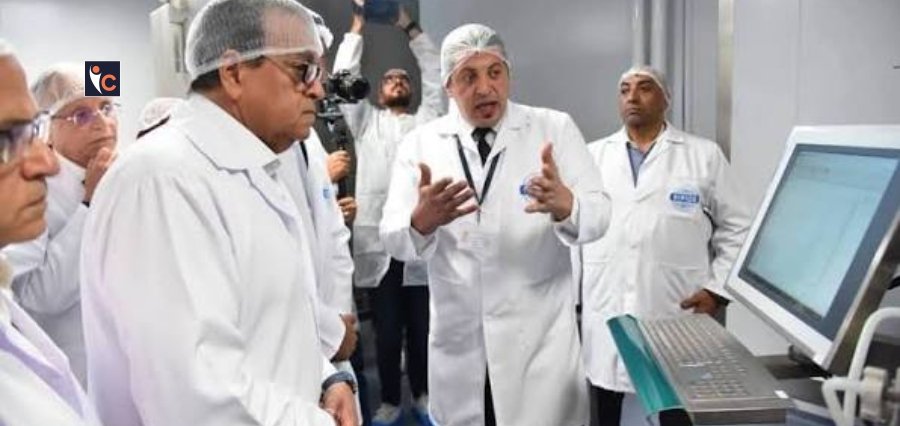
EIPICO Chairman and Managing Director Ahmed Kilani walked the minister through the plant’s structure and operations during the visit, outlining how the facility functions from raw material intake to finished product.
Spanning 10,500 square meters, the plant carries investments that exceed $100 million. It stands as the first facility in Egypt and the wider Middle East to produce biologic medicines and biosimilars through a single integrated process that starts with genetically engineered cells and concludes with the finished pharmaceutical product.
The company built the plant using the Modular Construction Concept, partnering with Sweden’s Pharmadule on the design and assembly approach. Workers manufactured, assembled and tested the production units abroad before shipping and installing them in Egypt, a method that keeps the facility aligned with international quality standards.
During the tour, Abdel Ghaffar reviewed bioreactors, preparation zones and automated filling and packaging lines that transform biological inputs into ready-to-distribute medicines.
The new plant gives Egypt a regional edge in biopharmaceutical production and lowers the country’s reliance on imported biologic medicines.