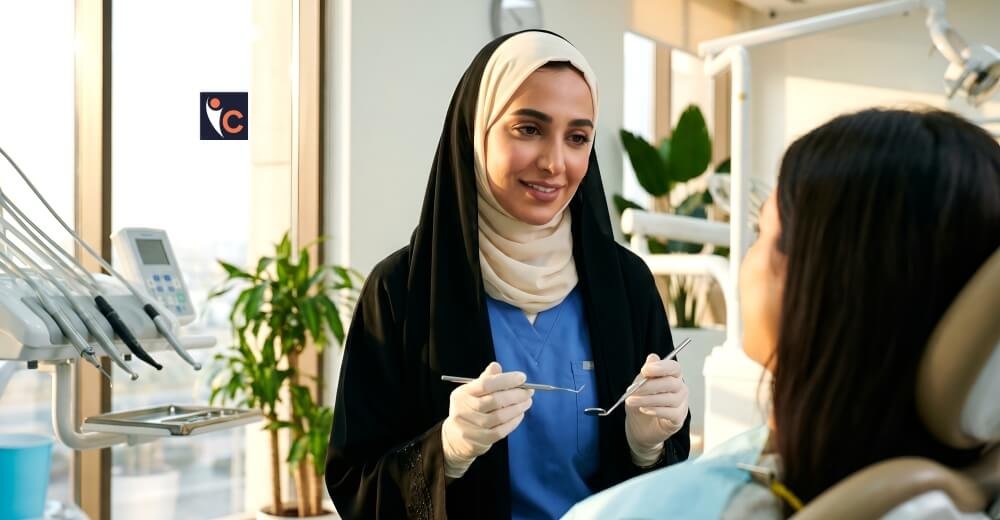
Comprehensive Orthodontic Care
When most people think about orthodontic treatment, the first thing that comes to mind is the cosmetic result: a straighter smile, teeth that line up properly, and the confidence that tends to follow. That result genuinely matters and is a real part of what orthodontic care delivers. But the work of orthodontic specialists goes considerably deeper than how teeth look. Properly aligned teeth and correctly positioned jaws affect how a person bites, chews, speaks, and maintains their oral health over the course of a lifetime. Understanding the full picture of what orthodontic care involves helps patients make better decisions and appreciate why the expertise behind it matters as much as it does.
The Specialized Training Behind Orthodontic Care
Orthodontic specialists are dental professionals who have gone through advanced training beyond general dentistry training built specifically around diagnosing, preventing, and correcting misaligned teeth and jaw problems. That extra preparation digs into how teeth actually move, how the facial skeleton grows over time, and the full range of treatment approaches available for conditions that vary widely in complexity.
A general dentist can spot when something is off and point a patient in the right direction, but actually treating those issues, particularly when the case is complicated, takes the kind of focused clinical experience and specialist knowledge that only comes from dedicated training. The conditions that fall under this umbrella run the full range, from mild crowding that mainly affects how teeth look to more serious bite problems that affect how a person functions day to day and create real risks for their dental health over time.
How Modern Orthodontic Treatment Has Evolved
The image of orthodontic treatment has changed considerably from the metal brackets and wires that dominated the field for decades. While traditional fixed appliances remain highly effective and widely used, particularly for complex cases, orthodontic specialists today work with a broader range of treatment options than any previous generation of practitioners had access to.
Clear aligner systems have become a significant part of how treatment gets delivered, offering patients an approach that is far less visible and removable for eating and cleaning. For the right cases, these systems produce outcomes that match what traditional appliances achieve. Deciding which approach suits a specific patient’s situation rather than applying the same method to every case is one of the core clinical judgments that specialist training develops.
Personalized Care for Every Age
Orthodontic treatment is not just for teenagers, even though adolescence remains when many patients begin care. Orthodontic specialists treat patients across the full age range from young children where early intervention can guide jaw development in beneficial directions, through adolescence where the bulk of treatment occurs, to adults who are increasingly pursuing orthodontic care for both functional and personal reasons.
Each stage of life brings different clinical considerations. Growing patients offer opportunities to take advantage of developmental changes in the jaw. Adult patients require approaches that account for a fully developed skeletal framework, where the same techniques need to be applied differently to achieve the same goals.
The Importance of Comprehensive Treatment Planning
What a patient experiences during orthodontic treatment the appliances, the adjustments, the gradual shifts in tooth position is the visible part of a process that begins with careful planning well before anything gets placed. Orthodontic specialists invest serious time in the diagnostic phase, analyzing records, studying the relationship between teeth and jaw structures, and building a treatment plan that maps out where things are and where they need to go.
That planning is not procedural formality. The decisions made before treatment starts shape everything that follows: the sequence of tooth movement, the mechanics used to reach specific positions, and the timing of different phases. Well-planned treatment runs more efficiently and more predictably than treatment that skips this foundation.
Maintaining Results for the Long Term
Active treatment ends when teeth reach their intended positions, but the work does not stop there. Teeth that have been moved carry a natural tendency to drift back toward where they came from, and retention protocols are what prevent that from happening.
Retainers worn on the schedule recommended by orthodontic specialists maintain what treatment produced. Patients who follow retention guidance consistently hold their results well over the long term. Those who do not often find some degree of shifting occurs, a reminder that retention is not an optional extra but a genuine part of achieving a lasting outcome.
In Summary
The difference between treatment provided by a trained specialist and treatment undertaken without that depth of preparation tends to show up most clearly in complex cases and in how results hold up over time. Orthodontic specialists bring clinical depth, diagnostic precision, and treatment planning capability that produce outcomes addressing the full picture of a patient’s dental health, not just the most visible dimension of it.