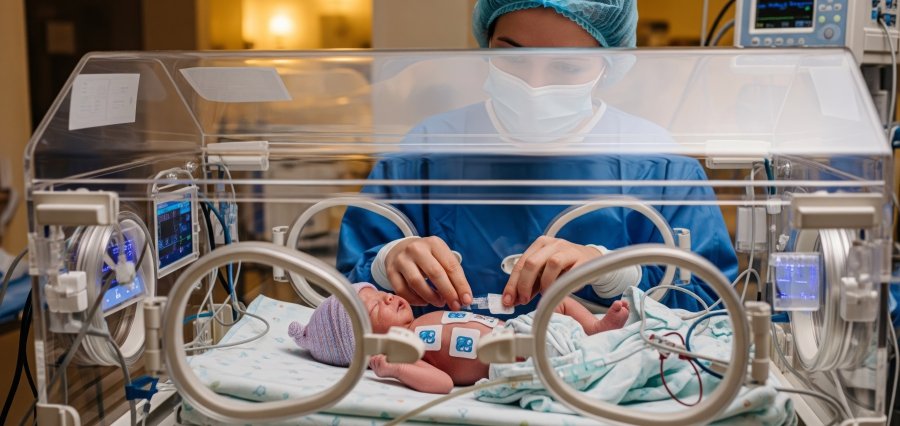
A mother in Dubai sits beside a small glass box, her hand resting on the side because she cannot yet hold her baby. Machines hum quietly around her, tracking every heartbeat and breath. A few thousand miles away in a smaller hospital, a nurse checks the same kind of monitor, connected by video to a specialist who is guiding her through a decision in real time. Two very different rooms, one shared goal: giving the smallest patients in the world a real chance.
This is the quiet, unglamorous side of medical progress. Nobody writes headlines about a monitor that catches a problem an hour earlier than it used to, but that hour can decide everything. Behind every incubator and every wire taped gently to a newborn’s skin sits a growing field of engineering and medicine working together, often without much public attention at all.
This blog discusses how NICU technology works, how it is being used across Arab hospitals today, and what emerging innovations in neonatology mean for the future of newborn care around the world.
What This Technology Actually Covers
NICU technology refers to the equipment and systems used to care for premature or critically ill newborns. This includes incubators that hold a stable temperature, ventilators that support fragile lungs, monitors that track vital signs around the clock, and phototherapy lights that treat jaundice safely. None of this is flashy. Most of it works quietly in the background, which is exactly the point.
What makes NICU technology so important is timing. A premature baby’s body is still finishing work that would normally happen inside the womb. Every piece of equipment in the unit exists to buy that body more time, safely and gently, until it is ready to do the work on its own.
How Arab Hospitals Are Using It Today
Across the Gulf region, NICU technology has reached a genuinely advanced level. Hospitals in the UAE now run large, specialized units built specifically for premature and critically ill newborns, staffed by neonatologists trained to use this equipment at a high standard. Saudi Arabia has followed a similar path, with major hospitals operating advanced units in cities across the country.
One especially encouraging development has come from smaller, regional hospitals. In parts of Saudi Arabia, medical teams have started connecting local units to specialists through telemedicine, letting a doctor guide bedside care in real time even from a distance. This kind of setup has already helped reduce how long some babies need to stay in the hospital, a small but meaningful example of NICU technology closing a gap that used to separate large cities from smaller ones.
New Developments Worth Watching
A few emerging innovations in neonatology are quietly changing how newborn care works, and several are already appearing in hospitals today. Artificial intelligence now helps some monitoring systems flag warning signs, such as early indicators of infection, before obvious symptoms appear. This gives medical teams a head start that simply was not possible a decade ago.
Wireless, skin-friendly sensors are another one of the emerging innovations in neonatology gaining ground. These replace some of the wired equipment traditionally taped to a baby’s fragile skin, making it easier for parents to hold their baby skin to skin without disturbing the monitoring. That kind of contact matters for bonding and, according to many neonatal teams, for the baby’s development as well.
Telemedicine itself counts among the more practical advances shaping the field, since it does not require every hospital to have a full specialist team on site. Instead, expertise can travel electronically to wherever it is needed most.
Closing the Gap Across the Region
Not every hospital in the Arab world has access to the same level of NICU technology, and that gap is real. Some areas still rely on simpler equipment and more limited staffing than major city hospitals enjoy. The encouraging part is the direction of travel. Investment in neonatal care continues to grow across the region, and tools like telemedicine make it possible to extend specialist knowledge into places that could not previously support it.
This matters for a very practical reason. A baby’s chances often depend less on where they are born and more on how quickly the right equipment and expertise can reach them. Every step that closes this gap, whether through new equipment or a video call linking two hospitals, moves the region closer to consistent, dependable care regardless of location.
Why This Matters Beyond the Hospital Walls
For families, this equipment is rarely something they think about until they need it. Then, almost overnight, it becomes the most important thing in their world. A functioning monitor, a well-trained nurse, and a specialist available on call can be the difference between a frightening outcome and a hopeful one.
For the wider region, continued investment in NICU technology and emerging innovations in neonatology reflects something bigger than healthcare spending. It reflects a commitment to giving every newborn, regardless of birthplace, a fair starting point in life.
Conclusion: A Quiet Field With a Loud Impact
NICU technology rarely makes headlines, yet it shapes some of the most important outcomes in modern medicine. Across Arab hospitals, from major cities to smaller regional centers, this technology is steadily advancing, supported by real investment and a growing willingness to share expertise across distances. As emerging innovations in neonatology continue to develop, from smarter monitoring to gentler sensors, the future for the smallest and most vulnerable patients looks steadily brighter, not just in the region, but for newborn care everywhere.