Mental health care has long carried an uncomfortable reputation: clinical, distant, and often reduced to a single method applied uniformly to very different people. As conversations around trauma, relationships and emotional wellbeing continue to grow, this traditional model is being challenged by practitioners who recognize that healing is different for every person who walks through their doors.
This shift is especially clear in the growing use of integrative therapy, where clinicians look beyond traditional talk therapy to address trauma, family patterns, and relationship challenges. In a culturally diverse region like the UAE, this flexible approach to care is becoming increasingly important.
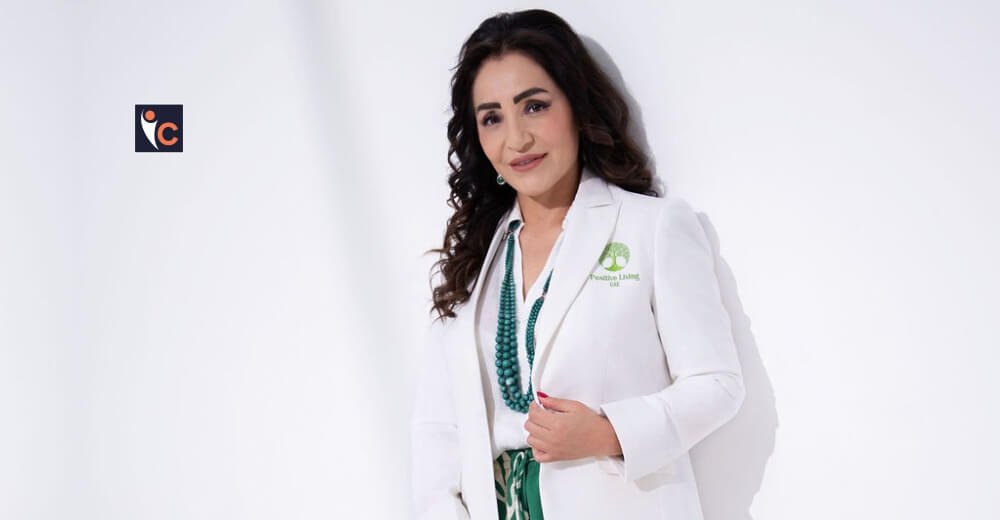
Leading that shift is Luz Maria Villagras Surco, Founder & Clinical Director of Positive Living UAE. A Holistic Psychotherapist, she has spent more than a decade building a practice around the idea that no single technique can hold the full complexity of a human being.
What sets her apart is not simply the breadth of her training, but the intention behind it. Every modality she has studied serves one underlying philosophy: that lasting healing grows out of trust, not formula. That belief now guides a practice expanding beyond Dubai into Peru, carrying the same ethos across borders.
Let’s explore how Luz is reshaping the way people understand healing and emotional wellbeing!
A Journey Shaped by Curiosity and Lineage of Peruvian’s Healers
Luz Maria’s journey did not begin in a classroom. It began in her grandmother’s hands.
Her grandmother, “Mama Alicia,” was a native Peruvian shaman, a healer who understood medicine plants and energy work the way others understand language: fluently, instinctively, as something felt in the body before it is ever explained in words. Luz Maria descends from a lineage of Peruvian medicine women, and when she was just five years old, Mama Alicia looked at her and saw what she would become. She told her granddaughter to carry the gift forward. To become a healer. To help people.
It was, in every sense, a calling before it was a career.
There is something fitting in her name. Luz means “light” in Spanish, and it has shaped her into a woman full of curiosity and compassion, endlessly asking why people carry pain the way they do, why some find their way back to themselves while others stay stuck for years. That question has never left her. It has simply grown more sophisticated, more informed, more capable of holding an answer.
Over the years, Luz Maria has pursued that answer through both science and spirit. She built a foundation in psychology, then continued studying across a wide range of holistic modalities, always adding new tools to a growing practice rooted in one core belief: healing is not one size fits all. What moves one person forward may not move another at all. The work, she believes, is to meet each person where they actually are, not where a textbook says they should be.
That belief is the quiet thread running through everything Luz Maria does today, work shaped as much by a grandmother’s blessing in the Peruvian mountains as by a lifetime of clinical study. Two forms of knowledge, carried together, in service of the same purpose: helping people find their way home to themselves.
Over more than a decade working in the UAE, she trained across many different modalities because she never believed one single method could hold the full, tender complexity of a human being. She studied under Marisa Peer in Rapid Transformational Therapy, under Richard Bandler in NLP, and later in Conscious Parenting with Dr. Shefali Tsabary, Compassionate Inquiry with Dr. Gabor Mate, and Imago Couples Therapy with Harville Hendrix and Helen LaKelly Hunt, Dr Stephen Porges (Polyvagal Theory) an many others eminences in the field of Psychology and Quantum Physics like Scientist Dr Joe Dispenza.
Each of these teachers shaped not just what she does, but how she sees healing. For her,
“Healing is not a fixed technique to apply, but an unspoken relationship of trust & compassion built between client and the therapist, based on love & gentleness.”
That perspective eventually led to the founding of Positive Living UAE. It was never about building a business first. Rather, she wanted to create a space where people in Dubai, and now in Peru too, could finally feel truly seen, maybe for the first time.
That purpose continues to guide her. It is what led her to where she is today, and what still wakes her up every morning.
Looking Beyond a Single Approach
Early in her career, Luz noticed that talk therapy alone often left something unresolved, especially with trauma that lives in the body and not just in the mind. That observation pulled her towards “Somatic Work,” which is “Trauma recorded in the Body”. This led Luz to learn techniques that work in releasing the Trauma in the body e.e: Anger, Sadness, Guilt, Blame, Criticism, Self-sabotaging…etc. RTT Clinical Hypnotherapy and NLP are some of these techniques, along with CBT and Compassionate Inquiry. These approaches reach the subconscious patterns that conventional conversation sometimes cannot touch.
Her response was not to replace one approach with another, but to build a toolkit broad enough to meet each client exactly where they are; in other words, Luz is a master in “Integrative Trauma-Informed Therapy”. These tools help Luz as a therapist to work with people such as: a couple trying to rebuild trust, a parent trying to break an old cycle, a teenager dealing with self-harming behaviours, and addict trying to quit a negative habit, or someone carrying trauma they have never spoken about out loud.
For her, “Holistic care has a straightforward meaning: refusing to separate the mind from the body from the relationships of the past that shape us in the now.”
That belief is at the heart of everything Positive Living UAE does. Rather than approaching each individual through a single predefined method, the practice seeks to understand the person and the experiences that have brought them there.
Leading with Warmth, Structure, and Trust
As Founder and Clinical Director, Luz holds two roles at once: the clinician and the guardian of the vision. Her responsibilities extend from direct clinical oversight to ensuring that the wider practice continues to reflect the standards and values on which it was built.
Day to day, she remains closely involved in how therapists and neurofeedback practitioners work with clients, making sure every person who walks through the doors in Al Barsha Heights receives care that is evidence-based and deeply human at the same time.
She believes outcomes come from consistency. That is why she invests heavily in the ongoing training of her team and stays personally involved in reviewing how their approaches are landing with clients.
Her leadership style reflects the same philosophy she brings into the therapeutic relationship. She notes that “I lead the way I try to sit with clients, with warmth first, and structure gently behind it.”
She wants her team to feel safe bringing her their questions and even their doubts, the same safety she hopes every client feels the moment they walk through the doors.
At the same time, she holds a high bar for the practice. The people who come to Positive Living are often at their most vulnerable, sometimes sharing something they have never said out loud before. That trust, she believes, deserves nothing less than full excellence and care.
She tries to model what compassionate inquiry looks like in the way she mentors her practitioners, listening fully before she ever guides. She also makes space for the team to keep learning together, because the field never stops evolving, and neither should they.
Turning Challenges into Growth
Building something from the ground up in a new country and now doing it again as the practice expands into Peru has taught Luz that growth rarely feels comfortable while it is happening.
There have been seasons of real uncertainty, including moments when she wondered if the vision she held so clearly in her mind would translate into something sustainable. Yet what carried her through was staying close to why she started: the belief that people deserve compassionate, holistic care.
She also learned to trust that if she kept showing up with integrity, the practice would find its footing.
Her own training became another source of strength. The same tools she offers her clients helped her process her own doubts rather than allowing them to silently shape her decisions.
This experience has reinforced an important part of her leadership philosophy: growth requires both conviction and self-awareness. Building a practice is not simply about moving forward when everything is certain; it is also about remaining connected to purpose when the path becomes uncomfortable.
That perspective is particularly relevant now as Positive Living expands beyond the UAE and into Peru.
Remaining a Lifelong Student
For Luz, relevance in psychology and the continuing evolution of what we know about Psychology as a science, makes her to embrace the diverse uniqueness of every human is a continuous learning and adapting to each individual, and she continues to learn, accepting that she will never learn enough. Luz deeply believes that she will always continue to learn. She describes herself as a lifelong student first and a teacher second.
She continues to seek out training with leaders in the field, which is why she sought certification directly from practitioners such as Marisa Peer, DR. Harville Hardville, Dr. Shefaly Tsabary, Dr. Daniel Siegel, and Dr. Gabor Mate and many others rather than settling for second-hand knowledge.
Her learning, however, does not come only from formal training. She also learns from her own clients, she listens closely to what they bring into the room because, as she notes, real learning comes from real scenarios, real people and from real life, that learning is often ahead of the research.
Her ability to speak Spanish, English, Italian, and a bit of Arabic has further broadened her perspective. These languages have opened doors to different cultural understandings of healing and helped her maintain a perspective that is wide rather than narrow.
For Positive Living UAE, this cultural understanding matters because the communities it serves are diverse. Staying relevant therefore means continuing to learn from both professional knowledge and the lived experiences of the people who seek support.
Measuring Success Through Human Change
While formal recognition has its place, Luz’s proudest achievements are not necessarily the ones that appear on a certificate.
She finds the greatest meaning in witnessing personal transformation: a couple who arrive barely speaking to each other and eventually learn to truly hear one another, or a client who has carried trauma for years finally experiencing the relief of being able to exhale.
Building Positive Living UAE into a trusted holistic clinic over more than a decade is another milestone she values deeply. The expansion into Lima and Arequipa in the country of Peru (South America) represents a new chapter, bringing the same vision across the ocean and closer to her own roots and family.
Among her certifications are: Bachelor in Psychology, ABA (Applied Behaviour Analyst) RTT Clinical Hypnotherapy, Neuro-Linguistic Master, Certified Conscious Parenting Practitioner (Montessori Style), Psychotherapy Somatic Method such as Compassionate Inquiry (CI ), Clinical Imago Couples Therapy from two renowned Authors and Doctors Hendrick Harville and PhD Doctor Hellen Lakelly and lastly to her certification in Neurofeedback Brain Scanning Treatment and have also been meaningful because they represent a foundation of depth in the care she provides.
Luz is also the published author of four books: The Ugly Truth of Multi-Cultural Relationships and the Effect on Parenting, the Therapy Journal Session Book, the Anti-Anxiety Book, and The Past Trauma Journal Book, all available on Amazon UAE and through her website, www.positivelivinguae.com.
Yet for all her training, the most enduring reward remains beautifully human. Scroll through Luz Maria’s Google reviews or social media, and you will find something more valuable than accolades: page after page of gratitude, written by teenagers finding their footing, parents rebuilding trust with their children, and couples rediscovering each other, all of them changed by the safety, space, and compassion she creates in every session.
For Luz Maria, it is these quiet transformations, not titles or achievements, that mean the most. Watching a client begin to see themselves and their relationships in a new light is, to her, proof that real healing rarely announces itself with fanfare. More often, it arrives softly, in the moment someone finally feels safe enough to change.
Protecting the Person Behind the Practitioner
Running a practice while working closely with clients can be demanding, and Luz is open about the fact that balance does not happen automatically.
She explains, “Balance is something I have to protect on purpose; it never simply happens on its own in this line of work.”
Family remains central to that balance, especially her loved ones back home in Peru. She considers that time sacred and almost non-negotiable.
At the same time, she tries to practice what she teaches. She could never ask clients to do the gentle inner work of boundaries and rest while quietly skipping it herself.
Some days, that means stepping fully away from the clinic just to breathe and simply be. On other days, it means honestly recognizing when she is giving more than she has left to give and choosing to pause before reaching empty.
The principle is simple but important: Caring for others well has to start with caring for herself, tenderly and without guilt.
Building a Meaningful Practice
For aspiring professionals entering Psychology and the world of Psychotherapy, Luz’s advice begins with curiosity. She encourages them not to rush toward one single certification and stop there, but to stay curious and allow their training to be as layered as the human beings they will eventually sit across from.
She also encourages professionals to seek mentors who challenge them, not just those who validate them. At the same time, she emphasizes protecting personal well-being because this work asks practitioners to hold space for other people’s pain.
Above all, she believes professionals must remember that technique is only one part of the relationship. She notes that
“The technique is only ever a bridge; what actually heals people is the trust and safety you build with them, the loving space you provide on each therapy session.”
For her, holding onto that truth is what allows a professional to build a practice that is not simply successful, but meaningful.
Expanding the Reach of Compassionate Care
Looking ahead, Luz’s vision is to continue expanding the reach of holistic, compassionate care beyond Dubai. The growth of Positive Living into Lima and Arequipa under Positive Living Peru is especially meaningful because it brings the work closer to her own roots and family.
She wants more people to understand that healing does not have to be clinical and cold. It can be warm, personal, and rooted in genuine relationship.
She also hopes to keep training more practitioners in holistic approaches so that the impact of the work multiplies far beyond what she alone could ever reach. The goal is to make compassionate, effective care feel within reach wherever someone may be in the world.
This vision brings her professional journey back to the purpose that started it.
Positive Living UAE was never meant to feel like a clinic in the cold, clinical sense of the word. She wanted it to feel like a home, a place where someone could walk in feeling unseen and leave feeling held.
That same heart is now being carried into the expansion in Peru, closer to her own family and roots. For Luz Maria, healing becomes even more meaningful when it reaches the people and places closest to you.
Coming Home to Yourself
At the core of Luz Maria Villagras Surco’s work is a message that reaches beyond any particular therapeutic modality.
“If there is one thing I would love for readers to carry with them after this, it is this: you are not broken, and you are not too much, and you are not alone in whatever you are quietly carrying.”
So many of the people who sit with her have spent years believing they simply have to manage their pain in silence. One of the greatest honors of her work is watching that belief soften, little by little, until they remember they were always allowed to ask for help.
Her philosophy is not about promising an easy path or presenting healing as a fixed destination. It is about creating enough trust and safety for people to begin listening to themselves again.
That is why the future she envisions is not simply about expanding a practice geographically. It is about expanding access to a particular kind of care, one that remains compassionate, personal, holistic, and deeply human.
For every person carrying something they have not spoken about yet, her message remains clear:
“Healing is not about becoming a different person. It is about coming home to yourself, gently, and at your own pace. And you do not have to do it alone.”