Healthcare is shifting from treating disease to preventing it and helping people stay healthier for longer. This shift is especially important in family medicine, where physicians have the opportunity to understand patients over time, consider their wider circumstances, and focus on prevention alongside treatment. As obesity, diabetes, cardiovascular disease, metabolic disorders and age-related conditions become increasingly common, the role of the family physician continues to expand.
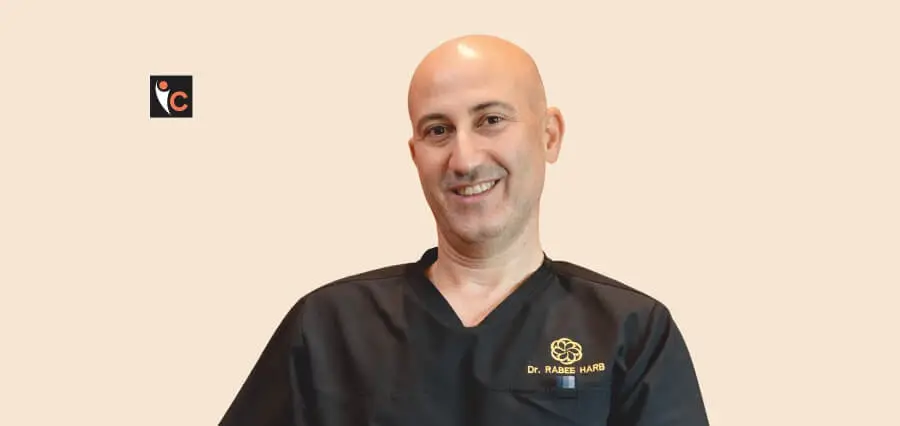
At the heart of this approach is Rabee Harb, Consultant in Family Medicine at Royale Hayat Hospital. His career has been guided by a simple yet powerful idea: “I wanted to treat people, not just diseases.” His clinical and academic work spans diabetes, women’s health, sports and exercise medicine, occupational medicine, weight management, prevention, and wellness.
Alongside patient care, he has also been involved in service development, teaching, digital health, and professional collaboration. With this broad approach, he continues to focus on one central question: what can be identified and addressed today to improve a patient’s health in the years ahead?
Let’s explore how Rabee is helping shape a more preventive, personalized, and connected approach to family medicine!
From Treating Diseases to Treating People
Rabee’s journey into family medicine was driven by his desire to understand the whole person rather than a single organ system or episode of illness. His training and work in the United Kingdom, followed by his move to Kuwait in 2013, reinforced his belief that family medicine is one of the few specialties that allows a physician to understand the whole person.
What attracted him most was continuity. A family physician can accompany patients through different stages of life, understand their family and social context, recognize patterns over time, and increasingly focus on prevention as well as treatment.
His postgraduate development has deliberately reflected that breadth. He obtained an MSc in Diabetes from the University of Dundee, a Diploma in Diabetes from Dundee, a Diploma in Sport and Exercise Medicine from the University of South Wales, the Diploma of the Faculty of Occupational Medicine, and the Diploma of the Royal College of Obstetricians and Gynaecologists. More recently, he completed certification in weight management through Harvard University and is now planning further academic study in wellness.
For him, these are not disconnected qualifications. Diabetes, women’s health, sports medicine, occupational health, obesity, prevention, and wellness all meet in the family-medicine consultation room. Together, they have shaped the physician he has become.
The Family Physician as Clinical Coordinator
As a Consultant in Family Medicine, Rabee’s work includes the assessment, diagnosis, and management of acute and chronic medical problems, preventive healthcare, health screening, weight management, wellness, and occupational medicine.
He sees the family physician as a clinical coordinator. A patient may arrive with a seemingly simple symptom, but careful assessment can reveal a cardiovascular, neurological, endocrine, musculoskeletal, or other problem. Working within a multidisciplinary hospital allows him to bring together the appropriate specialties, nursing, physiotherapy, nutrition, laboratory services, radiology, and allied healthcare professionals while maintaining the overall clinical picture.
This approach has also shaped his interest in service development. He has established and run three family clinics in Kuwait and has been involved in designing clinical templates and implementing electronic health-record systems. Earlier in his career, he also served as Director of Medical Services.
His interest in service development later extended into digital health, including electronic systems designed around family-medicine workflows and patient follow-up. Teaching has also remained an important responsibility. He has taught medical students in clinical settings in both the UK and Kuwait, participated in teaching at the University of Dundee, and taught medical students and foundation doctors during hospital rotations.
Today, students also spend time shadowing in his clinic. He wants them to see that excellent family medicine is not simply about knowing guidelines; it is about clinical reasoning, communication, continuity, and knowing when something does not fit the expected pattern.
Leadership Begins with Listening
For Rabee, healthcare leadership begins with listening. No individual, regardless of seniority, has all the answers. Strong leaders create an environment where people can share ideas, raise concerns, and challenge established approaches when there may be a safer or more effective way forward.
He believes leadership requires integrity, accountability, empathy, curiosity, humility, and adaptability. Healthcare is changing rapidly, and “this is how we have always done it” cannot be the standard by which future care is judged.
His professional involvement also extends beyond his immediate clinical environment. As a member of the External Relations and International Cooperation Committee of the Kuwait Association of Family and General Practitioners, he values professional collaboration, exchange of knowledge, and strengthening the role of family medicine in Kuwait while remaining connected to developments internationally.
At its core, he believes “Excellence is rarely the achievement of one person. It comes from creating a culture in which physicians, nurses, allied professionals, and administrative teams understand that each of them contributes to the patient’s experience and outcome.”
Moving Toward Prevention
Family medicine is facing a growing burden of obesity, diabetes, cardiovascular disease, metabolic disorders, and age-related conditions, often occurring together. At the same time, patients are more informed and increasingly expect personalized, proactive healthcare.
Rabee’s approach has therefore moved progressively toward prevention, early risk identification, and longitudinal care. Rather than asking only whether today’s laboratory result falls within a reference range, he also asks where a patient’s health is heading over the next five, ten, or twenty years, and whether there is something meaningful that can be changed now.
This philosophy is behind the comprehensive preventive health and wellness programme he is working to implement. The programme is designed to bring together physical and mental health assessment, laboratory investigations, appropriate imaging and disease-risk assessment, nutrition, genetics and epigenetics, weight management, fitness, screening, and multidisciplinary input.
The aim is not to perform more tests for the sake of testing. It is to identify meaningful risks earlier, interpret them in the context of the individual, and convert information into a practical plan the patient can understand and act upon.
Evidence Before Innovation
Medicine requires lifelong learning, and Rabee regularly attends Family Medicine Updates, conferences, lectures, and scientific meetings. He continuously follows developments in family medicine, diabetes, cardiometabolic health, obesity, preventive medicine, healthy ageing, and diagnostic technology.
He also believes knowledge should travel in both directions. He has delivered community and professional lectures on smoking and vaping, COPD, breast cancer awareness, prostate cancer awareness, chronic diseases, and improving diagnostic accuracy in family medicine.
A principle that has increasingly shaped his clinical practice is evidence-based early adoption. New blood investigations, biomarkers, genetic tests, imaging techniques, and diagnostic technologies continue to emerge. When a new tool develops sufficient evidence and can answer a meaningful clinical question, improve diagnostic accuracy, or identify risk earlier, he believes physicians should understand it and consider how it can responsibly improve care.
At the same time, he is clear that novelty alone is not evidence. He does not believe in adding investigations simply because they are new. “Innovation is valuable when it is scientifically defensible, clinically relevant, and changes what can meaningfully be done for the patient,” he notes.
Connecting Care Through Digital Health
Rabee’s interest in digital health has extended beyond the conventional electronic medical record. He has contributed to the development and implementation of electronic health systems adapted to family medicine, with the aim of making clinical information more structured, accessible, and useful for continuity of care.
He has also helped develop a patient-facing application designed to give patients a more active role in managing their health. Patients can add relevant medical information, communicate with him, and receive reminders about investigations, follow-up tests, and when these should be repeated.
For him, good healthcare should not end when the patient leaves the consultation room. Digital tools can help connect today’s clinical decision with the follow-up that may be needed months later.
He is also interested in the appropriate role of artificial intelligence and digital health. These technologies can strengthen pattern recognition and decision support, but they should enhance, not replace, the judgment, responsibility, and human connection of the physician.
Milestones That Matter
Some of the milestones Rabee values reflect clinical achievement, while others reflect service development, education, and the trust of patients. He has been fortunate to receive an Innovation in Primary Care Award in Kuwait and a Best Patient Care Award.
He has also established and run family clinics, managed medical services, pursued postgraduate qualifications across several complementary fields, and continued to develop practical skills relevant to primary care.
Research and writing have remained part of that journey. His work has included research relating to diabetes and dietary plans in primary care, electronic health records adapted for family medicine, and earlier academic and medical writing. He has also participated in clinical audits and research during his years in the UK.
Yet awards and qualifications are only one measure of a medical career. Some of the most meaningful achievements happen quietly: diagnosing something before it becomes serious, helping a patient regain control of their health, supporting someone through a difficult period, or seeing a patient return years later and still place their trust in you.
“That trust is perhaps the recognition I value most,” he says. “In family medicine, it is earned one consultation at a time.”
Finding Balance Beyond Medicine
Medicine can easily occupy every available hour. There is always another patient, another report, another article to read, and another development to understand. Rabee has learned that maintaining one’s own health is not separate from being a good physician.
Physical activity, family time, adequate rest, and interests outside medicine help maintain perspective. Physicians should also try to practise the principles they recommend to patients: movement, sleep, stress management, nutrition, and preventive health.
Outside medicine, he writes poetry. Writing has been part of his life for many years, alongside medical and academic writing. Medicine and poetry may appear to belong to different worlds, but both require observation, listening, and an understanding of human experience.
For him, balance is not about dividing every day perfectly between professional and personal life. It is about recognizing when one part has been neglected and deliberately restoring perspective. Medicine is a long career, and sustainability matters.
Advice for the Next Generation
For aspiring family medicine physicians, Rabee’s advice begins with curiosity and an appreciation of the specialty’s breadth.
“Never lose your curiosity, and never underestimate the breadth of family medicine.”
He encourages young physicians to learn the evidence and guidelines thoroughly, while also learning to listen and understand when and how to apply knowledge in practice, since each patient is unique.
Sometimes, the most important diagnostic information comes from allowing a patient another minute to explain what they are experiencing. A good family physician needs knowledge across many specialties, but also needs to recognize uncertainty, know when to investigate further, and know when to ask for another opinion.
Teaching students has repeatedly reminded him that medicine is learned not only from textbooks but from observing how decisions are made in real clinical situations. He encourages students to develop disciplined clinical reasoning rather than simply ordering investigations, while remaining aware of new diagnostic tools that may improve care.
His message is equally clear about humility. Being able to say, “I need to look into this further” is a strength. Clinical knowledge earns competence; consistency, communication, and compassion earn trust. Combining both is what allows a physician to make a lasting impact.
“As a family doctor, each patient becomes part of your family.”
A More Preventive Future for Family Medicine
Rabee believes family medicine will become even more important because healthcare systems cannot sustainably depend on treating disease only after it becomes advanced. The next decade, in his view, should bring a shift toward earlier identification of risk and more personalized prevention.
This is one of the motivations behind the comprehensive preventive health and wellness programme he is developing. The concept is to move beyond the traditional health check and consider physical health, cardiovascular and metabolic risk, mental wellbeing, cognition, nutrition, fitness, weight, lifestyle, vaccination, and appropriate disease screening in an integrated way.
Advanced biomarkers, genetics and epigenetics where clinically appropriate, improved imaging, wearable technology, digital health, and artificial intelligence will give physicians increasing amounts of information. But information alone does not improve health. It must be interpreted within the context of the patient’s history, lifestyle, family risk, priorities, and values.
The family physician is uniquely positioned to bring those pieces together.
He would like the annual health check of the future to become more than a collection of normal and abnormal results. It should become a personalized roadmap for better health, helping people not simply increase lifespan, but extend healthspan, the years in which they remain healthy, independent, and active.
Leaving a Lasting Impact
If Rabee could contribute to one lasting change, it would be helping move medicine further from a predominantly reactive model toward a genuinely preventive one.
Too often, healthcare begins when disease has already announced itself. He believes physicians should ask earlier questions: What are this person’s risks? What is changing? What can we prevent? Which evidence-based tools can help us see a problem sooner? And what can we do today to improve this person’s health ten or twenty years from now?
He also believes knowledge becomes more valuable when it is shared. Whether through teaching medical students, speaking to the community, lecturing to colleagues, research, professional collaboration, or mentoring younger physicians, he hopes to contribute to a culture in which doctors remain curious and pass knowledge forward.
Medicine will become increasingly technological. Artificial intelligence, genomics, remote monitoring, advanced diagnostics, and personalized therapeutics will continue to change clinical practice. Yet genuine progress should never remove the humanity from medicine.
For him, the physician of the future should be scientifically rigorous, technologically capable, and relentlessly curious, while also remaining compassionate, accessible, and willing to listen. His professional identity brings together clinical medicine, education, service development, innovation, and a strong belief in prevention.
As he reflects on the future of family medicine, his philosophy remains clear: “I believe modern family medicine should evolve in a way that is evidence-based, preventive, personalised, and technologically informed, while preserving the long-term human relationship at the centre of care.”
That balance between knowledge and humanity defines the path he continues to pursue, and the kind of healthcare he hopes to help shape for the years ahead.